
The Journal
Tai Chi Walking for Beginners
A short introduction to tai chi walking, including a simple practice session with support, and an overview of current research into balance and fall risk.
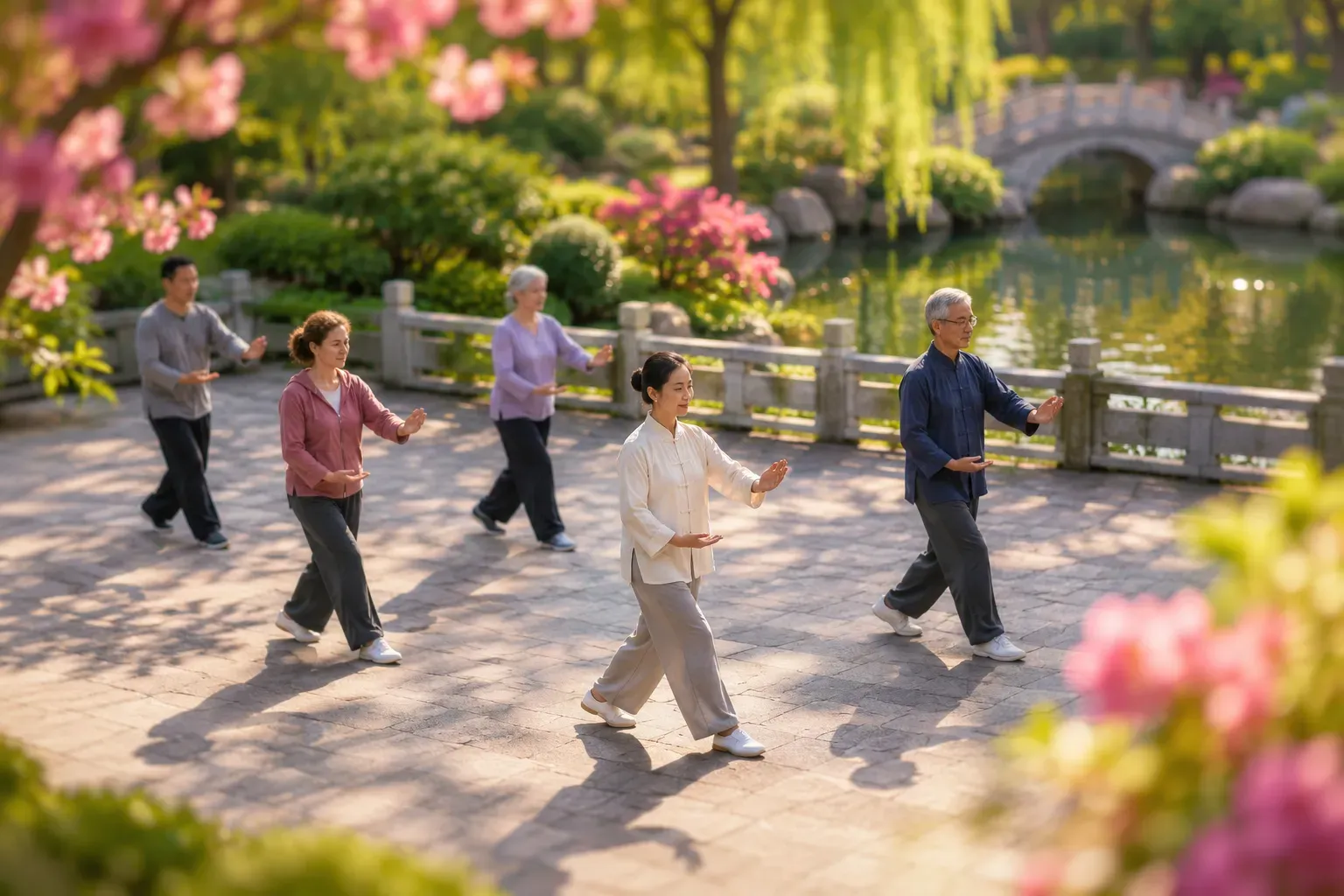
This page contains an introductory explanation of tai chi walking for beginners and some basic instructions for practicing tai chi walking.
First do a few slow weight shifts and then learn the Tai Chi walking on a clear floor with support and time to practice.
Tai chi walking is not Japanese interval walking. This is a practice to slow down and become aware of weight transfer during walking, as opposed to changing intensity of walking.
What Is Tai Chi Walking?
The origin of tai chi can be traced back to China where it was practiced as a martial art hundreds of years ago. Today, tai chi is practiced by people of all ages and abilities for health and relaxation. There are many different styles of tai chi, and within each style there are many different forms. A form is a sequence of movements that is taught by a teacher.
Tai chi walking is the practice of stepping skills of tai chi in order to focus attention on how to move one’s weight onto the leg that is about to step, place the other foot and then transfer weight to the new step. The Institute teaches the full sequence of steps in the form.
The principles behind tai chi walking are based on established practices, though the way of teaching details can vary greatly from one tradition to another.
| Practice | Main focus | Typical movement |
|---|---|---|
| Tai chi walking | Controlled weight transfer, posture and awareness | Deliberate, slow steps drawn from tai chi practice |
| Ordinary walking | Moving at a comfortable or purposeful pace | Continuous steps suited to the person and setting |
| Japanese interval walking | Changing exercise intensity | Repeated faster and slower walking intervals |
One Japanese interval protocol for interval walking for older adults consists of 3-minute intervals of fast and slow walking.
How Tai Chi Walking Works
In ordinary walking we often do not even think about how we place our feet. In tai chi walking, however, the transition from one leg to the other is part of the practice. We transfer our weight from one leg to the other in a controlled manner, notice when the moving foot is light, place that foot down and then slowly transfer our weight to that foot as well.
The Institute’s basic sequence begins with standing on both feet with your shoulders relaxed and your knees slightly bent. In the forward step the practitioner touches the heel down first and then lowers the rest of the foot. He or she then transfers weight to that foot. In the full sequence the practitioner first balances on the supporting leg before moving the other foot.
It may be that you feel unstable when you are standing on one leg. If this is the case, then keep a hand on a stable support and practice smaller shifts of weight. You can keep both feet on the floor until you have been taught how to progress by an instructor or healthcare professional.
Breathe naturally. Do not try to force a deep bend in any of the postures. Do not try to copy the posture of the instructor if it feels unstable or painful.
A Beginner’s First Practice
The following is an introduction to tai chi walking and is based on the beginner sequence taught by the Tai Chi for Health Institute. This is a starting point for learning, not a substitute for a teacher of tai chi who can assess your progress and make any necessary adjustments.
1. Prepare your space
You need a clear space on the floor, about the length of 3 or 4 steps. The surface should be flat and not covered in carpets or rugs. It is best to have good light and to wear flat, comfortable shoes that fit well and do not slip.
Use your support as necessary and keep your space clear and within reach.
2. Find a comfortable stance
Set up your stance by standing with your feet about shoulder width apart. This can vary depending on what feels most stable for you. Keep your knees soft without trying to bend them too much. Stand up straight with your shoulders relaxed. Look straight ahead and breathe normally. Keep your hands by your sides or use your support.
Are both feet on the floor? If you feel unsafe or even painful while standing then please stop and seek guidance.
3. Shift your weight
Now shift your weight over the other foot and slowly return to center. Repeat with the other foot. It is okay to keep both feet on the floor as you are learning to feel the weight shift.
The Institute’s sequence to progress to making one foot light enough to lift will be introduced in future practices. For now a small shift is best. You do not have to lift a foot today.
4. Add a controlled step
Step forward with the lighter foot for a short distance. The Institute’s way of stepping forward in tai chi walking is to touch the heel down first and then lower the rest of the foot. Then slowly transfer your weight to that foot. Keep the step as short as possible to maintain control and use the support of the counter or rail as needed.
Pause after you have moved your weight forward. If you feel steady, then bring the other foot forward and repeat. Take a few steps and then stop and turn slowly. Do not practice any backward steps until you have been instructed on how to do so safely in a suitable space.
5. Finish and return to ordinary walking
Come back to standing on both feet in a comfortable position. Take a moment to notice how you feel. Then go back to your normal walking or sit down to rest. If you feel dizzy, in pain or feel unsafe in any way stop immediately and seek medical attention if symptoms persist.
A session of supported weight shifts is sufficient for most people. An instructor can help you to progress.
Common Beginner Mistakes
Don’t rush the step! You need to have found your balance before you can move on to the next step. Take your time and pause after each weight shift until you feel ready to move on.
Locking the knees. This is to be avoided. Keep your knees slightly bent. There is no need to bend your knees as if you are about to squat.
Leaning too far. Move over your supporting foot without reaching your head and shoulders forward. Take a shorter step and use a stable handhold if necessary.
Don’t try too much too soon. You can learn to take long strides, practice balance unsupported and even take backward steps, but these can wait until you have mastered smaller movements, keeping both feet on the floor as required. A teacher can modify the tai chi form as necessary.
Holding your breath. Breathe normally. No need to force each breath to match a step as you learn the basic sequence.
What Does the Research Say?
Research has shown that tai chi programs can help improve balance and reduce the number of falls in older adults living in the community. A review of exercise studies of older adults living in the community found that tai chi programs compared to control activities (not designed to reduce falls) reduced the rate of falls and the number of people who fall, with different levels of certainty of evidence for each outcome. Other types of exercise also showed benefits for some older adults.
These studies were conducted on specific groups of people and therefore do not necessarily apply to you. The amount of time that you spend practicing tai chi, as well as the manner in which you practice (i.e. with or without instruction), as well as the full program that you are practicing, will all determine the amount of benefit that you receive.
It is also important to note that Tai Chi does not prevent all falls and is not a cure for arthritis or aging. If you are concerned about falling then speak with your healthcare professional to discuss your concerns and possible ways of dealing with them, such as appropriate exercise, a medication review or other support. Tai Chi may form part of a broader package of measures to help with your concerns.
Is Tai Chi Walking Suitable for Older Adults?
Tai chi is practiced by many older adults. However, because of individual differences in mobility and balance, as well as age, some people may be able to practice standing on one foot without support, whereas others may require a handrail, seated exercise or even one on one instruction.
Talk with your doctor or physical therapist if you have concerns about activity because of falls, dizziness, injury or other reasons. Ask the tai chi instructors about any modifications that you might need to make to the movements.
How to Find a Qualified Instructor
For finding classes for beginners look for classes in community centers, libraries, senior centers or tai chi schools. Ask what style of tai chi is taught and what the instructor’s training is. Also ask if the instructor is used to teaching older adults or people with physical limitations and how he or she adapts the movements for them. The Tai Chi for Health Institute instructor directory can be a good starting point for finding classes.
Let the instructor know if you use any support for your exercise and ask if there is any other support that you can use. Also ask if there is a stable rail or chair that you can use for support as you are practicing the exercises. A good teacher will allow you to ask questions, take breaks as needed and practice smaller movements as needed. Also ask if the class teaches the full sequence of movements for the style of tai chi that you are interested in learning.
Be wary of teachers who promise that Tai Chi will cure a medical condition or even prevent falls. If there are any medical concerns, they should be referred to a health care professional.
Beginner Practice Checklist
Print this page section before your short practice session.
- Floor is level, clear, and well lit. No loose rugs or cords.
- My shoes fit securely and do not slip.
- A stable counter or rail is within reach throughout the movement.
- I have asked a healthcare professional about any balance or health concerns.
- I can stand comfortably, with relaxed shoulders and soft knees.
- I will begin with small weight shifts and keep both feet down if needed.
- I will use support and add a short forward step only when ready.
- I will breathe normally and stop if I feel dizzy, experience pain or feel unsafe.
- Pause, turn carefully and finish before you become fatigued.
- I know where to find a qualified instructor for feedback.
Frequently Asked Questions
Is tai chi walking exercise?
Yes. Tai chi is a form of movement practice and as such it requires you to control your posture and steps. The amount of effort that is required varies from person to person and from practice to practice. A few slow steps are not automatically equivalent to a brisk aerobic walk or a complete tai chi class.
Is it the same as Japanese walking?
Japanese interval walking is a form of exercise that alternates between faster and slower walking. Tai chi walking is a form of movement practice within tai chi, which focuses on slow, deliberate stepping and weight transfer.
Can it be done indoors?
A clear, level indoor space can be used for tai chi walking. Leave enough space for your steps and any support that you may require. Good lighting and a nonslip surface are more important than the length of the hall.
How long should beginners practice?
There is no specified duration for beginners of this sequence of movements. It is best to begin with a few movements of weight shifting or stepping and cease before control is lost due to fatigue. Your instructor or healthcare professional will be able to advise you on the length of practice and on progression.
Do you need special shoes?
Special shoes are not required for this introductory session. Your usual, comfortable, secure, and nonslip shoes will be fine. Your instructor will inform you if special footwear is required for the class or for the floor.
Sources
- Tai Chi for Health Institute beginner walking instruction and fall prevention teaching guidance.
- NCCIH overview of tai chi and fall prevention and evidence for older adults.
- Interval walking training pilot study, describing alternating fast and slow intervals.
- Tai Chi for Health Institute instructor search.



Comments