
The Journal
Walking After Dinner: Benefits and How to Begin
Explore what research says about short after-dinner walks, blood sugar and timing, and find a flexible routine that fits your evening.
November 5, 2026
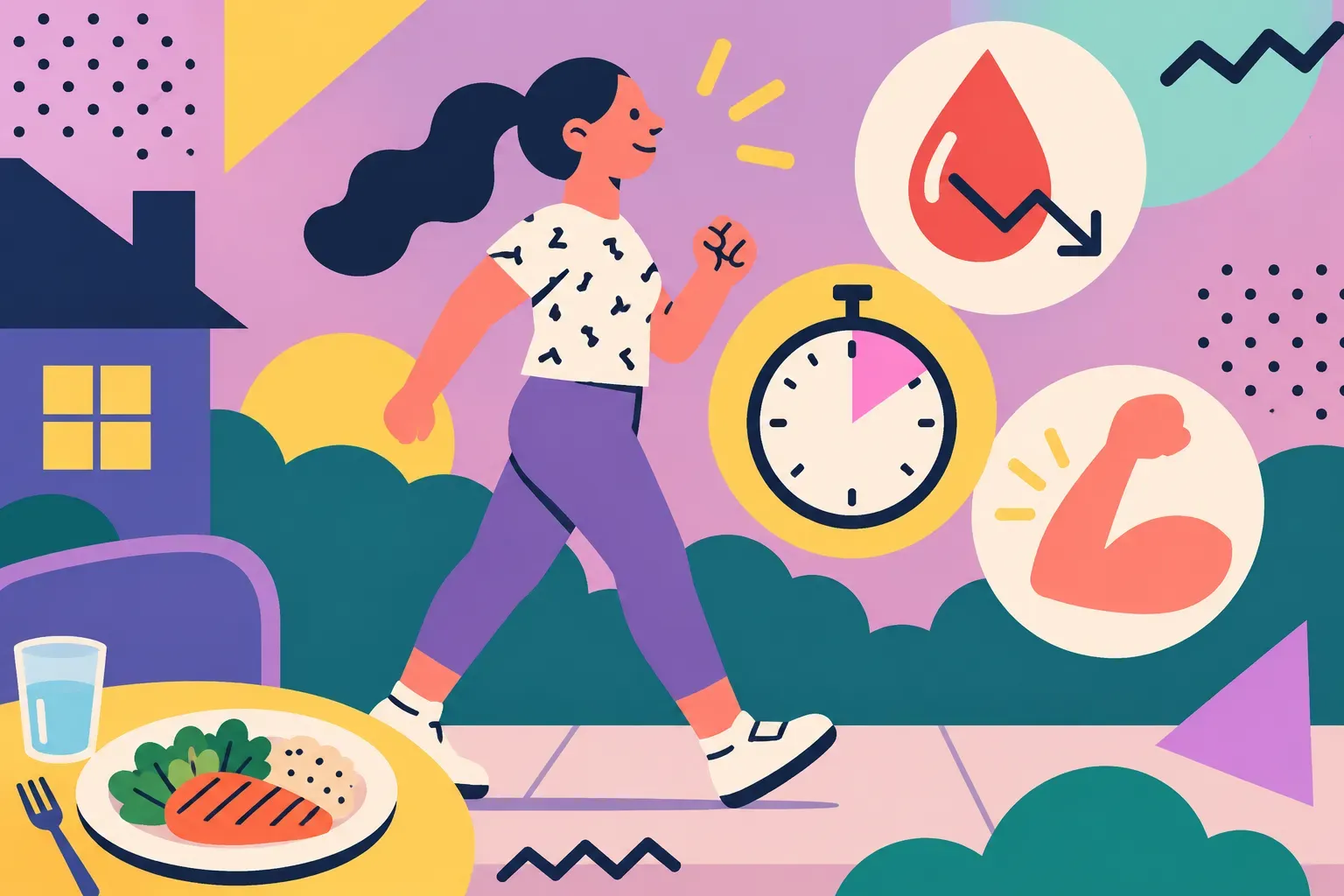
Dinner time is a familiar transition in the evening. After you finish dinner, you have a short period of time before you get on with the rest of your evening. This time can be used for a short walk. You can walk around the block or even walk indoors.
There is a research question here, too. Physical activity can help manage blood glucose, and some small studies have found lower glucose after meals when participants walked after eating. The results do not promise the same response for everyone or show that a dinner walk replaces diabetes care. The CDC suggests a 10 minute walk after dinner as one possible starting goal for people with diabetes, with activity choices discussed with a healthcare professional.
Why Walk After a Meal?
When you eat, the body converts food into glucose that then enters your blood stream. Your muscles use the glucose for energy as you go about your physical activity. The CDC states that regular physical activity can help to manage blood sugar. How your glucose responds to meals, however, depends on several factors including the food that you eat, the medicines that you take, and your physical activity level.
An after dinner walk offers a practical cue. Dinner already happens in your routine, so the walk can follow something you do anyway. It does not need a special destination. You can choose a short, familiar route and adjust it to your schedule and abilities.
The CDC supports regular activity for health, including glucose management for people with diabetes. A particular study may measure glucose for only a few hours or days. Those findings do not prove a specific long term outcome from a nightly walk.
What Does Research Say About Post-Meal Walking?
The first study was a randomized crossover study with 41 adults with type 2 diabetes. Each person was assigned two different walking plans for separate 2 week periods. One plan was to walk for 30 minutes each day at any time of the day that the participant chose. The other plan was to walk for 10 minutes after each main meal, beginning within 5 minutes of finishing eating.
The researchers measured the glucose response over the 3 hours after meals. The average glucose response was lower with the after meal plan compared to the once daily plan. There was a notable difference between the two plans for the dinner meal. The study compared three walks with one walk, not a single dinner walk with no walk. Its participants had type 2 diabetes, and its short intervention does not establish long term outcomes or apply equally to every reader.
In a small laboratory-based study of 10 older adults at risk for impaired glucose tolerance, the participants walked on a treadmill for 15 minutes after each meal, or for 45 minutes in the morning or afternoon, on separate study visits. The post meal walks began 30 minutes after each meal. Glucose levels were lower after dinner with the post meal walking pattern than with either of the longer walks.
This is useful evidence, but it is a small, controlled study. It looked at the short-term glucose response of a specific group of people, not their long-term health. Its three daily walks cannot tell us what one dinner walk alone would do for a different person.
| Evidence | What was examined | What it supports | What it cannot tell you |
|---|---|---|---|
| CDC activity guidance | Public health guidance for people with diabetes. | A 10 minute after dinner walk is one way to start being active. | It does not guarantee a particular glucose change for each person. |
| Reynolds and colleagues, 2016 | 41 adults with type 2 diabetes. Two 2 week walking plans, including 10 minutes after each main meal. | The after meal plan had a lower measured post meal glucose response than the comparison plan. | The independent effect of a dinner only walk or long term clinical outcomes. |
| DiPietro and colleagues, 2013 | 10 older adults at risk for impaired glucose tolerance. Three 15 minute post meal walks compared with a longer walk at another time. | The study observed a lower post dinner glucose response with the post meal pattern. | A universal best time or duration, or the effect of a dinner only walk. |
These studies make a case for further research and a reasonable question for your healthcare team. They do not make a stopwatch a treatment plan.
How Long Should You Walk?
The 10 minute walk after dinner is a good starting point for people with diabetes. For some people 10 minutes may be too long at first but you can work up to it. The CDC uses 10 minutes as an example of a clear, manageable goal for physical activity for people with diabetes. Choose a walk that is manageable for you and discuss other suitable physical activity with your healthcare professional.
If you can easily manage a 10 minute walk after dinner, keep to this duration or build up gradually to more. You do not have to make every evening as physical as possible in order to get credit for your physical activity. Your routine should be as long as you can manage, and as enjoyable as possible.
The studies on walking after dinner used different plans and groups of people, so we cannot make any hard and fast rules about the best length for a walk after dinner. It can be a short walk to start with.
Does Timing Matter?
Immediately after eating
Timing is part of the research, but the details matter. In the 2016 trial, participants were asked to begin within 5 minutes after each main meal. In the 2013 study, participants began 30 minutes after each meal. Both studied repeated walks across the day. Neither establishes that everyone must leave the table immediately after dinner.
If you are able to walk immediately after a meal then that is convenient for you. If you are feeling too full then you can leave a little longer before you start your walk and perhaps do a gentler walk to start with. If you are feeling unwell then you should discuss this with your healthcare professional.
Later in the evening
A later walk is still physical activity. It may fit better around family, work, weather or how you feel after eating. The studies reviewed earlier did not directly test a single immediate dinner walk against a single later evening walk in a broad adult population. They cannot tell you how those two choices compare for your own glucose response.
You can plan a route and time that work for you. For example, a well lit indoor space may be more practical for an after dinner walk than an outdoor loop after dark. If you have been given a plan for physical activity as part of your glucose management by your healthcare team, use this plan to choose the time for your walk.
Consistency versus precision
Do not treat dinner as the start of a countdown to a physical activity session. The CDC supports a clear, attainable activity goal. For a habit, it can be helpful to link the activity to a routine that you already have, such as clearing the table or putting away leftovers from dinner.
That is a practical habit suggestion, not a claim that consistency has been proven more effective than precise timing for post meal glucose. That would require direct comparison of specific groups of people on specific schedules of walking.
A Practical After-Dinner Walking Routine
Set a time window for your walk and get out some comfortable shoes for walking. Alternatively, clear some space in your home to walk around. Choose a short route that you can easily make even shorter if you need to return home sooner than expected. You can walk with someone else, listen to music or podcasts or just have some quiet time to yourself.
Start by walking at a comfortable pace. You can turn around at any time, stop for a rest, or even try another form of exercise instead. Your aim for this first week is to find out what works for you, not to complete a test. If you miss a day, that’s okay. Just look at why you couldn’t make it and try to work around it next time.
Seven-day habit tracker
Write down your own plan for the evening and record what actually happened on each day. It is not necessary to include the time that you walked on each day, and you can leave a day blank if you did not walk on that day.
| Day | Plan or place | Walk or movement completed | Minutes, optional | How it fit your evening |
|---|---|---|---|---|
| 1 | __________ | __________ | _____ | __________ |
| 2 | __________ | __________ | _____ | __________ |
| 3 | __________ | __________ | _____ | __________ |
| 4 | __________ | __________ | _____ | __________ |
| 5 | __________ | __________ | _____ | __________ |
| 6 | __________ | __________ | _____ | __________ |
| 7 | __________ | __________ | _____ | __________ |
At the end of the week, look for a practical pattern. Did the time work? Was the route convenient? Would an indoor option help on a busy evening? Keep the part that worked and change the part that did not.
What About People With Diabetes?
The CDC encourages people with diabetes to discuss the types of activities that are best for them with their healthcare team. That conversation matters when you take insulin or other medicines that can cause low blood sugar, have frequent lows, or have other health concerns that can affect your ability to be active. A healthcare professional can help you develop a plan for physical activity that takes into account the timing of activity, monitoring of blood sugar, and how to treat low blood sugar.
The CDC’s blood sugar guidance states that being more active than usual can contribute to low blood sugar. Your doctor may recommend checking your blood sugar more frequently around times of activity, especially if you have type 1 diabetes, type 2 diabetes on insulin, or frequent lows.
Do not change your medication, food or monitoring of blood glucose based on this article. Discuss any low glucose readings or feelings of unwellness with your healthcare team and follow your existing care plan. Walking can form part of your care but is not a replacement for it.
Indoor and Outdoor Alternatives
Walking around the block is a good option. Make sure that you choose a familiar route and that you can make the turnaround point easily. You can walk with a friend or family member as part of a shared evening routine or you can walk alone.
An indoor corridor or even just some clear space in your home can be used for walking. You can walk back and forth along the corridor or even round in circles in the space that you have cleared. You may need to take more turns than you would on an outdoor walk, so make sure that you have enough space to walk safely and that there are no trip hazards. If walking is not accessible or comfortable, ask a healthcare professional about movement options suited to you.
Frequently Asked Questions
Is ten minutes enough?
Ten minutes is a CDC suggested starting goal for people with diabetes, not a guarantee or a universal dose. A shorter manageable walk can be a place to begin. Your healthcare team can help with an individual plan.
Is walking after dinner better than morning walking?
While there is no clear answer to this question, the small 2013 study on older adults at risk for impaired glucose tolerance did find that a pattern of three post meal walks led to lower post dinner glucose than a single longer morning or afternoon walk. However, this study did not compare a single dinner walk with a single morning walk in a large group of adults.
Can you walk after a large meal?
Choose a pace that is comfortable for you and wait until you feel ready to start walking again. If you feel unwell, then discuss this with your healthcare professional.
Does it help digestion?
Moving after dinner can be enjoyable but these glucose studies do not provide evidence that walking after dinner can help to treat digestive symptoms. Discuss persistent or concerning symptoms with your healthcare professional.
What if you cannot walk outdoors?
You can use a corridor inside a building or even some clear space in your home to walk in. You can adapt your routine to suit your circumstances or discuss other suitable physical activity with your healthcare professional.
Choose a time for your evening walk and a place to walk that you can easily reach. Then see if you can make it part of your routine.
Sources
- CDC, Get Active, May 15, 2024.
- CDC, Manage Blood Sugar, May 14, 2024.
- Reynolds and colleagues, Advice to walk after meals, Diabetologia, 2016. Randomized crossover study in 41 adults with type 2 diabetes.
- DiPietro and colleagues, Three 15-minute bouts of postmeal walking, Diabetes Care, 2013. Small laboratory crossover study in 10 older adults at risk for impaired glucose tolerance.



Comments