How to Find a Walking Club Near You
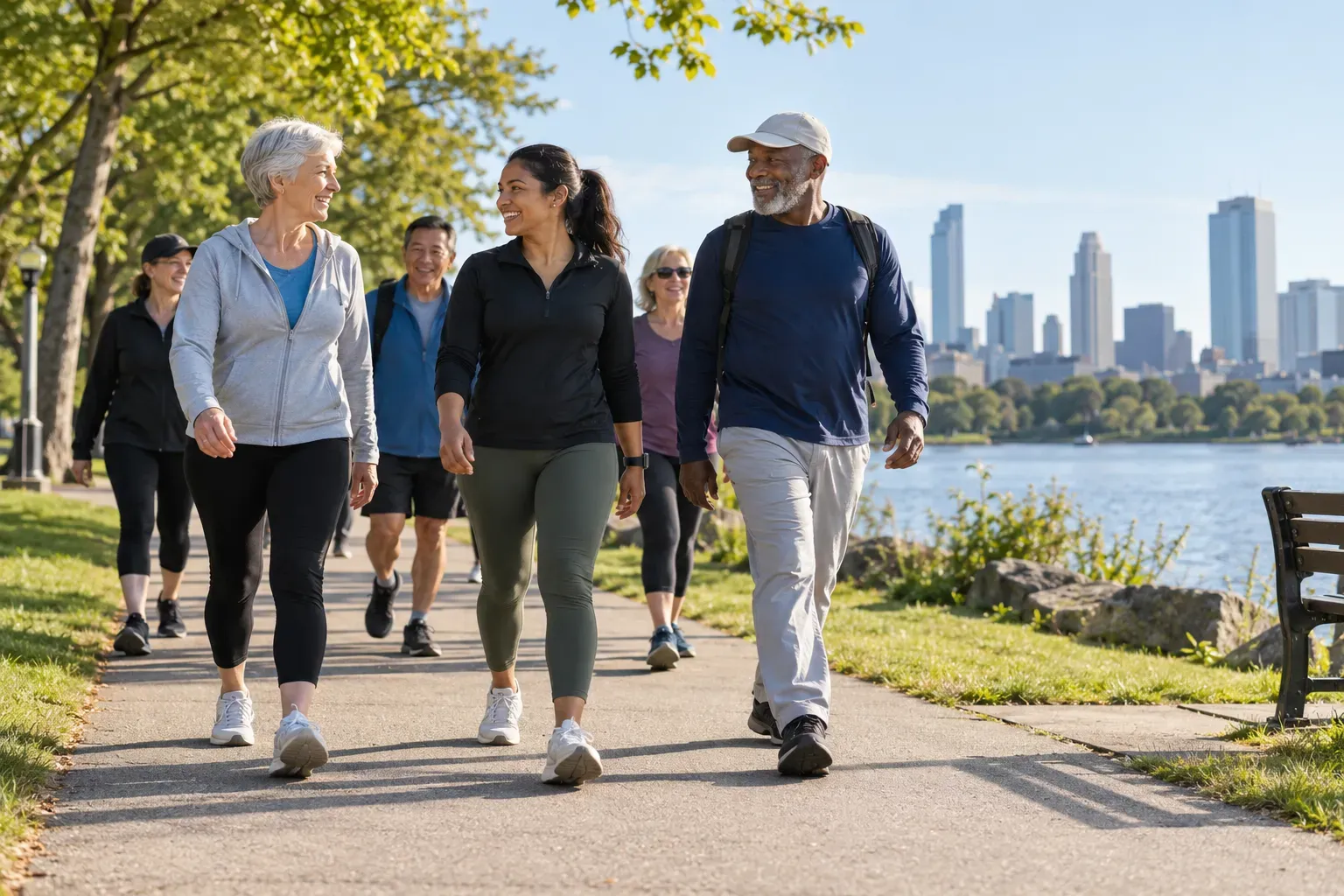
A walking club can be a relaxed stroll with neighbors or a fitness group that keeps a brisk pace. Both count.
Finding a walking club can be challenging, even more so when typing ‘how to find a walking club near me’ into a search engine. Most event pages detail that ‘all levels welcome’, however this does not give any indication as to the route, pace or what to do if you need to stop for any reason.
Where to Find Local Walking Groups
First, check with your local parks department. Search for walking programs on your city or county’s parks and recreation calendar. You can also search for other terms, such as “walking group,” “nature walk,” or “walking for beginners.” It is always good to call the parks department to see if they have any additional information that is not on their website.
Local community centers and libraries are also great resources. Check their events calendar and bulletin boards. See if the senior center in your area has any walking programs and what their age requirements are. Also, make sure to find out about the route of the program that you are interested in joining.
Walk with a Doc lists free community walks led by health professionals or medical students. You can search by location or by state. Walk with a Doc participants can walk or roll at whatever pace is comfortable for them, and for whatever distance they wish. For information on when the next walk will take place and where, contact your local chapter.
The AVA walking event calendar contains information about organized walking events and the walking clubs that host them. You can search for walking events in your area by clicking on the links to the traditional walking events in the regions listed on the left side of this page. Once you have found an event that interests you, click on the event’s name to open up a listing of the event’s details.
Local hiking organizations can offer short walks on trails. Read the details of each walk to find out if it is suitable for you. A beginner’s walk may have some hills, tree roots etc. on the surface and even some uneven ground. Find out what surface the walk is on and the amount of elevation gain on the walk before you sign up.
Look on community platforms for walking groups such as Meetup, search for walking groups in your area and look at the most recent events and contact information for organizers of groups and events that look like they could be of interest. Neighborhood groups and local community event calendars are also good places to find smaller local walking groups and events.
Don’t forget running stores, gyms and other fitness related organizations may hold walking or walk and run events. Just because an organization is a running club does not mean there are no walking members. Find out if there are any walking members and if so, how they are managed (e.g. are there separate walking leaders, do the walkers walk at a different pace to the runners etc.).
After searching for walking clubs, write down the date, location and contact information for the walks that interest you. Then confirm the information on the event page. Some event pages are not up to date and even if the page is current, the meeting point for the walk may have changed since the last time the page was updated.
What Kind of Walking Club Is Right for You?
The label for the type of walking club can give you some insight into what to expect from the group. However, the event details will tell you more about what to expect on a given walk.
- For casual, social walking, look for walks that are relaxed and have plenty of opportunity for conversation. Find out how long the walk is likely to take and whether everyone stays together as a group.
- Brisk fitness walks move at a more purposeful pace, sometimes over a set distance. Ask about the usual speed and whether there are slower pace groups.
- Beginner walks can use a shorter route or a flexible pace. Ask about breaks, distance and options for turning back.
- Mall walking takes place indoors and can be useful in uncomfortable weather. Check the entry hours, meeting point and walking surface.
- Trail walks take place in parks or natural areas and can include uneven ground. Ask about the surface, hills, distance and current conditions.
- Some groups serve a particular community or access need. Check eligibility and the route features that matter to you.
What do you want to get out of the group? If you want to meet people and have conversations then look for a group that does that. If you want to get some exercise then look for a group that walks briskly. If you want to go on a nature trail then look for a group that walks on trails.
What are the needs for accessibility? Do you need pavement or gravel? Are there hills? Are there curb cuts? Are there benches along the way? Are there restrooms? If you use a mobility aid, are the widths of the paths and any barriers that may exist on the route sufficient for you? “Easy” is not a description of route that answers all questions regarding accessibility.
Questions to Ask Before Joining
Send a short email to the organizer of the group, stating that you are new to walking with others, and that you would like to join them on their next walk. Tell them what sort of pace you like to walk at and what sort of route you prefer to walk on. Ask for the exact meeting place and time for the walk, as well as where to park, and where to enter the park if it is a large one.
How long is the typical walk? What is the average pace? (Minutes per mile can give you some idea of speed but doesn’t really tell you the whole story of how people walk). Does the group walk as a single unit or do they split up into groups of different paces? Do people wait for each other at turns? Can people who need to take a break or stop early on the walk return to the start?
Confirm the surface of the route, any hills and any other details of the route that may affect you. Confirm the availability of accessible parking, public transport, restrooms and places to sit on the route. Find out if there is an event fee, a membership charge for the walking club or if there is a cost for parking. Ask if guests can come along on a walk before joining the group.
What are the procedures for notifying members of weather cancellations and of registration for events? This information would be good to have as well.
Is This Walking Club Right for Me?
Print this off to take with you or save it to your phone.
- The meeting place and time work for me.
- I know the usual distance, pace and terrain.
- I have the route and access details I need.
- I know the costs and whether I need to register.
- I know how to check for a cancellation.
- I have asked about breaks and finishing early.
- The group welcomes newcomers, and I have a contact.
Your First Walking Club Meetup
Check the event page again before you leave for your first meetup. Make sure that the date, time, and location are all still correct, and that there are no weather changes that would affect the meetup. Wear shoes that you can walk in for the entire distance of the meetup, bring water with you if needed, and dress for the weather.
The first thing to do when you arrive is introduce yourself to the leader of the group. Tell him/her that this is your first time walking with the group. Ask how the route works, and where you will return to. If you arranged to do a shorter version of the walk, confirm that with the leader at the beginning of the walk. Save the organizer’s contact information somewhere.
Try to stay within your comfortable activity level and if you need to stop for a break or even to end the walk early, just let the leader of the group know. You do not have to keep up with the fastest walker in the group.
The first few minutes of a walking group can be awkward as you are unsure of who to speak to. A friend can come with you if the group permits guests. Ask the leader to introduce you to other members of the group or simply start walking with someone and see if they are happy to chat as you walk along.
After the walk, you can decide whether the route, the pace and the group were to your liking. You can then go back to the group or try another group.
What If You Can’t Find a Walking Group?
Search for walking groups in towns near you on different days of the week. Look up “social walk”, “mall walking” or “beginner nature walk” followed by the name of the town you live in. You can also contact the local recreation department even if they do not list any walking groups on their calendar. They may know of other groups or other programs in other towns nearby.
Start small. Invite a friend, neighbor or coworker for a short walk on a regular basis. Set up a regular meeting time and place. Describe the route, distance and pace that you intend to walk. Describe the surface and any known access features of the route. Set up a plan for dealing with changes in the weather and let people know how to contact the organizer.
If you invite people you have not met, choose arrangements that feel comfortable to you. You can meet in a public place and tell someone where you are going. No listing or platform can guarantee how a meeting will go.
This is how we can set up the walk for everyone, and then as a group we can amend the plan after our first walk.
Walking Club FAQs
Are walking clubs free?
Some are free. Walk with a Doc offers free walks. Other groups charge dues or event fees, and parking can cost extra. Find out about all the costs before you join.
Can beginners join?
Many groups welcome beginners, but the pace and distance still matter. Ask the leader of the group before the walk starts whether there are any slower groups or if there are any rest stops along the way.
Do walking clubs require memberships?
Some groups are set up as clubs and require membership, others are more informal and allow people to join in for the day as ‘drop ins’. Find out before the walk whether you need to register or join as a member for the first walk.
What if I cannot keep up?
Let the leader of the group know of your concerns before the walk starts. Ask if there are any slower groups, if there are any breaks during the walk and if there are any shorter routes that the group can take.
Are there walking clubs specifically for older adults?
Yes. Look for senior centers, recreation departments and community groups and see if they have any walks scheduled. Look at the description of the walk for the pace and the terrain of the walk. Older adults have many different preferences and abilities.
Can I start my own?
You can start an informal group of people walking together. You can set up a time, place, route and speed. If you wish to set up a club within an existing organization then ask them what the requirements are for this.



Comments