The Day Staying In Belongs in the Plan
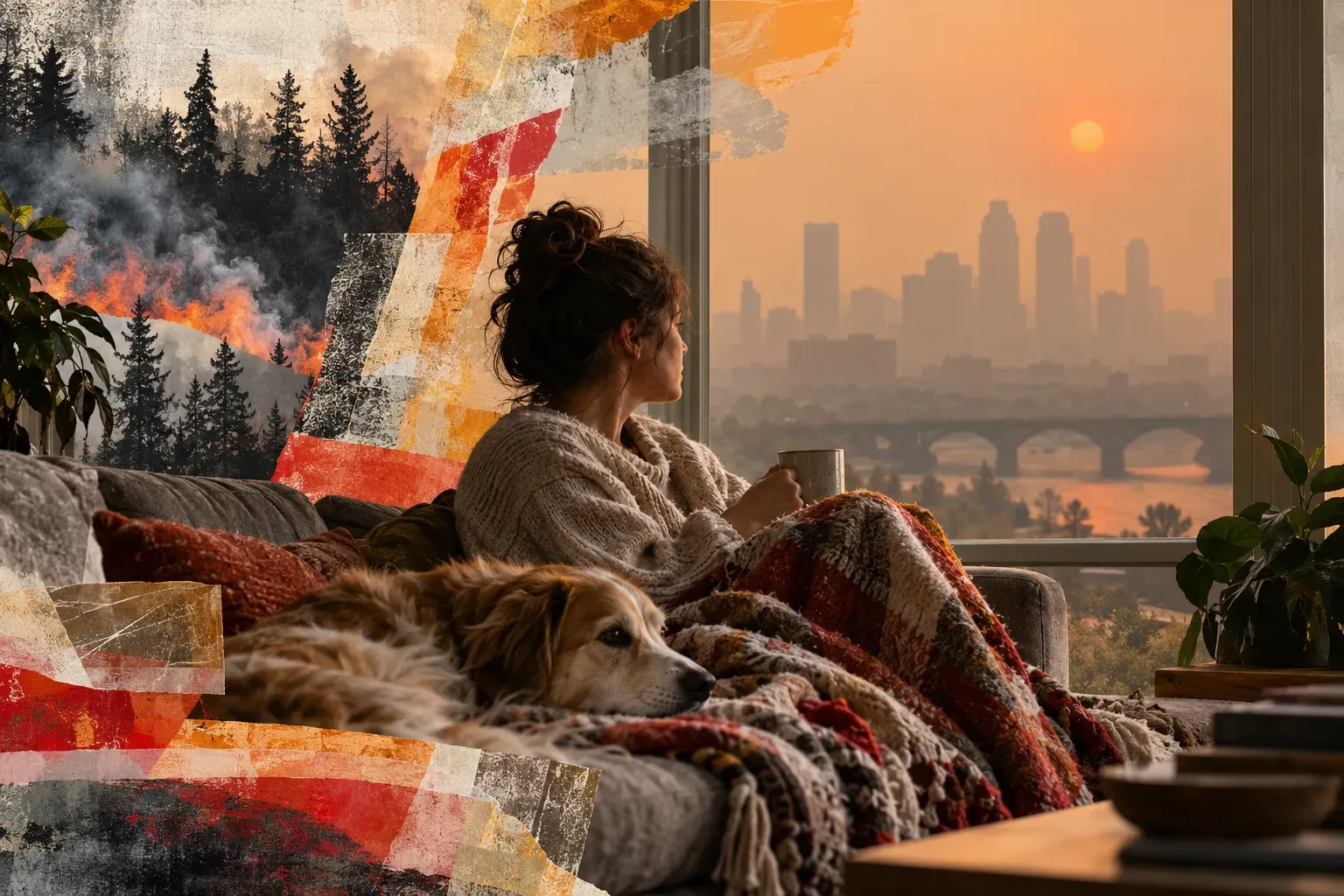
The daily habit of walking is something that I defend each day. On any given day, there can be many reasons why I decide to not go for a walk, but on July 16, 2026 the wildfire smoke from northern Minnesota and Canadian wildfires created hazardous air conditions throughout much of the state of Minnesota. This day’s column is a look back at that day and how I decided to stay in as opposed to going for a walk.
Wildfire smoke from northern Minnesota and Canadian wildfires covered much of Minnesota on July 16, 2026. FOX 9 reported that Minneapolis had the country’s second worst air quality that morning. Hourly readings in the Twin Cities broke records. This post is a look back at that day, not current conditions.
The Minnesota Pollution Control Agency expected air to reach the maroon level across east central, central, southeast, south central, west central, north central and northeast Minnesota. Duluth is in the northeast.
Maroon is the highest Air Quality Index level and is hazardous for everyone. In areas at that level, the sky looks smoky, distant views become hard to see, and smoke smells strong. I don’t need to write a scenario of personal health consequences to get across the seriousness of the smoke’s health effects. The description by the MPCA of what it is like is serious enough.
The heat was near 90 degrees, and the air improved later that day. Smoke and heat together can worsen health effects, including serious heart and lung problems such as an asthma attack, heart attack or stroke. My history of heart disease is not medical evidence of potential problems with smoke for others.
The American Lung Association says people in areas affected by smoke should stay indoors as much as possible and avoid breathing smoke, ash and pollution. It recommends keeping windows, doors and fireplace dampers closed and setting air conditioning to recirculate. In a car, windows and vents should stay closed, with the air set to recirculate.
These recommendations give a person something plain to do. I appreciate that.
Most people in smoke of that kind will have irritation in the eyes, nose or throat, coughing, chest tightness or shortness of breath. Symptoms to watch for include wheezing, difficulty taking a full breath, chest heaviness, lightheadedness, dizziness, a cough that persists or painful breathing. These symptoms can occur 24 to 48 hours after exposure to wildfire smoke.
I take my medications and see my cardiologist. For personal medical advice, talk to your doctor. I will not turn my recovery into directions for another person’s symptoms.
In addition to adults, children are particularly at risk because their lungs are still developing and they breathe in more air per pound of body weight than adults do. This is why I think it is very important for the public to understand how a decision to be outside can affect others, especially those with different circumstances.
Pets need to be taken into consideration too. The Animal Humane Society says birds, short nosed dogs such as pugs and French bulldogs, and pets with conditions such as asthma face higher risk. Coughing, wheezing, shortness of breath, a runny nose or irritated eyes can be signs. A pet struggling to breathe should go to an emergency vet right away.
I don’t have any pets, but I can still follow the advice of the Animal Humane Society as reported by FOX 9. “Animals can be just as affected by wildfire smoke as people.”
The society’s recommendations for animals on days with smoke include limiting time outside, taking quick bathroom breaks, avoiding strenuous exercise, and keeping walks short and slow. It recommends fresh water and indoor activities such as puzzles, toys or training.
My point in writing about this is to remind people that having a routine can help to give structure to a person’s day. Starting to walk after cardiac rehab gave my days shape. Being laid off later made that shape matter in another way.
For anyone reading later, the underlying account is FOX 9’s July 16 report. Its date is part of its usefulness. I want to keep a past emergency distinct from a present warning, so this column does not leave someone guessing about which day it describes.
The next smoky day will deserve attention on its own terms. The July report can only tell us so much about what will happen on a future day of smoke. It will be up to us to make the best decision for ourselves and those we care about on that day. Staying in is an option for that day.



Comments