Winter Walking Safety: Tips for Walking in Cold, Dark and Icy Conditions
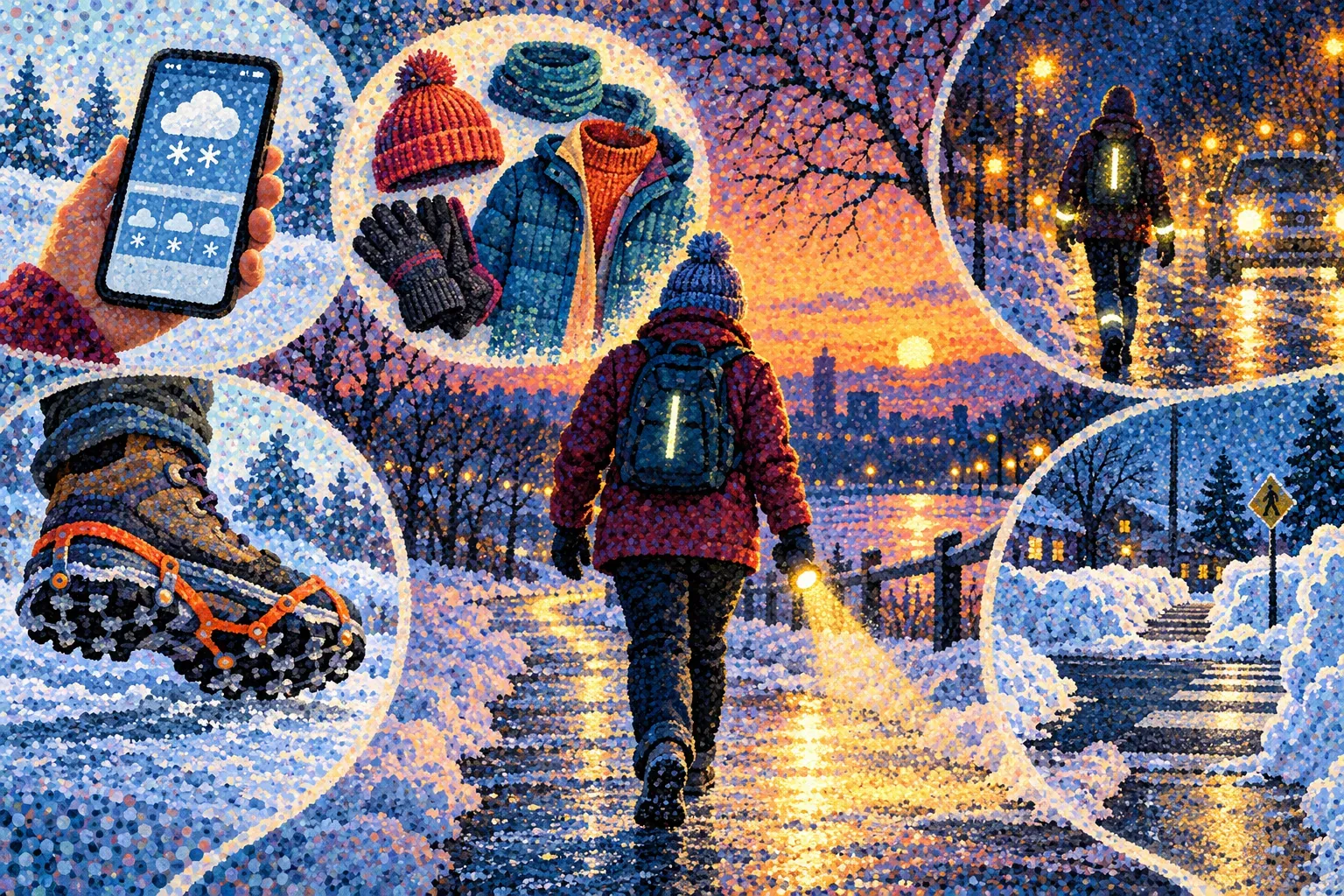
Before you leave, take a minute to check these things.
- Look at the forecast, wind chill and any local weather alerts.
- Check the route for ice, snow, closures and the time it gets dark.
- Choose warm layers, suitable footwear and a way to be seen.
- Pick a shorter route or an indoor place if conditions are uncertain.
Your usual winter walk can change, too. A path that is clear in the afternoon can become slippery after a freeze. A familiar route can look different in the dark of night. That’s why I like to plan a walk that can be changed if necessary.
The following walking outside in winter tips are intended for general use. Your health, ability to maintain balance, experience with winter outdoor activities and the conditions of the place where you live all must be taken into consideration. If you have any medical conditions or concerns about outdoor activities in cold weather, please consult your doctor for recommendations.
Check Conditions Before You Leave
First check the local forecast for the time you expect to be out on your walk and for the time you expect to return. Look at the temperature, wind, wind chill and precipitation. Wind chill is the temperature that the air feels on exposed skin in cold weather. This is determined by the wind speed and the air temperature. Wet clothing and sweat can also affect how you feel in the cold. Hypothermia can occur in cool weather if a person gets wet and then gets chilled.
The weather forecast is only a general description of weather for a certain location at a certain time. There are other things to consider such as whether the sidewalk at the corner of your house has been cleared of snow and ice. Look at the park notices or local reports for the area in which you plan to walk. Look from a safe distance if you are not sure. Ask someone who has walked that route before. Fresh snow can hide ice and uneven ground. If you are unsure of the surface you will be walking on, choose a route that you can check out before you start to walk or choose to walk indoors.
Read the details of any weather alert for cold weather such as extremely cold temperatures and follow the instructions for outdoor activities given in the alert. If the weather is dangerous for outdoor activity then avoid going for a walk for recreation purposes.
Check the sunset for the day you are planning to go for a walk and plan your return before it gets dark. Cloud cover and snowfall can make a route feel dark earlier.
How to Dress for Winter Walking
The NPS clothing guide provides more detailed information on each layer of clothing. A moisture managing base layer can help to keep you dry. An insulating layer can keep you warm. An outer layer can protect you from the wind, snow or rain.
- Moisture managing base layer. This is the layer that is closest to your skin. It can be any of a number of fabrics that manage moisture.
- Insulating layer. This layer is between the moisture managing base layer and the outer layer. It should be of sufficient thickness to hold in body heat.
- Outer layer. This is the layer that you will use to protect yourself from the elements. It should be of sufficient weight to protect you from the wind and keep you dry in rain or snow.
Cover your hands, head and ears. Gloves or mittens, a hat and socks that fit well will help keep you warm on cold, windy days. Make sure that any face covering you use allows for adequate breathing and that you can see where you are going. Change out of wet clothing as soon as you get indoors.
Do not worry about buying new winter walking clothes. If you are getting sweaty, stop somewhere sheltered to adjust a layer. If you cannot stay warm and dry, go indoors.
Choosing Footwear for Snow and Ice
The sole of your shoes or boots is very important. Make sure that there is enough tread on the sole and that they fit properly. Also, make sure that your feet stay dry. The CDC footwear guide for older adults recommends sturdy shoes with good traction.
There are many types of traction devices that fit over your shoes or boots. It is important to match the device to the surface you will be walking on and read the instructions for proper fit and use. Check whether the device is appropriate for cleared pavement or indoor floors. Remove it where the maker says it should not be worn.
But remember that there are limits to the traction aids that you can use. As the National Park Service notes, packed ice and deeper snow may require different equipment to help you stay on your feet. Even with the best shoes and the best traction aids, there will be some slippery surfaces that you cannot cross without risking a fall.
For more information on fitting road race shoes check out Choose a Road Race Shoe With Your Feet. This guide does not make claims for winter traction but does provide good information on shoe fit.
Staying Visible on Dark Winter Walks
Choose a well lit route with sidewalks or paths and crossings you can use. Carry a light with you to help you see where you are going as well as to help other people see you. The National Highway Traffic Safety Administration (NHTSA) recommends a flashlight as well as some reflective material for use at night.
Reflective material only works in the presence of other light. Active light is visible on its own. Both can help, but neither guarantees a driver has seen you. Drivers are responsible for watching for pedestrians and driving to conditions. Cross roads where you can see clearly and use signals to help you cross safely. Look for turning vehicles and other traffic in each lane as you approach a crossing.
Snowbanks and parked cars can hide pedestrians from drivers’ sight. If a crossing or sidewalk is covered in snow, do not assume that a driver will see you around it. Choose another route that is maintained for pedestrian use. If the only route available is too hazardous for you to walk on, then change your plans and do something else for the day.
For more information read our guide to planning a dark walk and preparing to be seen.
Picking a Safer Winter Walking Route
Choose a route that you can leave at any time. A short loop near home or a public building gives you options if the wind picks up or the surface changes. Check that entrances, restrooms and other facilities that you may need to use are open. A route with some shelter can be more comfortable in the wind but remember that even sheltered spots can still have some ice.
Look for maintained paths and accessible crossings. Ask how quickly a park or neighborhood clears snow from the sidewalks and crosswalks. A clear entrance does not guarantee a clear sidewalk for the rest of your walk.
When planning a winter walk, think about the return part of the walk as well as the out part. A downhill section can be difficult on ice even if the climb felt manageable. If you are uncertain about the surface of the return part of the walk then it may be better to turn back and find an alternative route.
Conditions on trails can change from what is on the summer map. There may be snow on the trail, a gate may be closed, or it may get dark earlier than you expect. Check the current notice for the area you are visiting immediately before you travel. Yesterday’s road or trail status may have changed.
Winter Conditions and Practical Choices
- Cold wind. Cover exposed skin with appropriate clothing for the forecast and use suitable layers for conditions.
- Wet snow or rain. For Wet Snow/Rain, wear outer layer of clothing to protect from wet conditions and appropriate footwear for surface conditions. Stay near to warm/dry location and turn around if clothing gets wet.
- Packed snow or ice. Check the tread on your shoes and use any appropriate traction aids. Choose a maintained surface for your walk and turn around if the footing is not suitable.
- Deep or fresh snow. For deep or fresh snow, check the surface and local guidance before setting out. Choose a cleared route or postpone your walk if you cannot assess what is under the snow.
- Early darkness. Bring a light and reflective material with you. Use a lit route with accessible crossings, or walk earlier in the day.
- Dangerous weather alert. Read and follow the local alert. Postpone or choose an indoor option as directed.
When It’s Better to Walk Indoors
There is no single temperature at which it is safe for everyone to be outside. Other factors such as wind, wet weather, surface ice, clothing and your health must also be taken into consideration. Extreme cold weather warnings, freezing rain and surfaces you cannot assess for safety are all reasons to walk indoors. Follow the advice of local officials during extreme weather events.
Look for an indoor track, community center, mall walking hours or another accessible indoor space. Call ahead to find out the hours of operation, if there is a fee, if you can access the space, and if walking is allowed. A few laps near home can replace a longer outdoor route. You can rest as needed and leave when you need to.
If no suitable indoor space is available, waiting for a better day is an option too.
Winter Walking Checklist
- I checked the forecast, wind chill, precipitation and local alerts.
- I checked daylight, closures and the expected surface conditions.
- My layers, hand and head protection suit the weather.
- My shoes fit, and any traction aid is fitted for this surface.
- I have a light or reflective material if I need them.
- I know my route, exits and a place to get warm.
- I have a way to contact help and a plan if conditions change.
- I have an indoor or postponement option.
Frequently Asked Questions
Is it safe to walk outside when it’s below freezing?
There is no single temperature that tells you whether it is safe to go outside to walk. You need to consider many things such as wind, rain, snow, cold weather alerts, the surface you will be walking on, how long it will take you to walk and how cold you will get. Also consider your health and how you would react to cold weather. If you are unsure, speak with your doctor. Always follow any local weather warnings and, if in doubt, go indoors or postpone your walk.
How can I avoid slipping on ice?
Keep in mind that while there is no way to eliminate all risk of injury, there are things that you can do to minimize your chances of falling on ice. First, choose to walk on surfaces that are well maintained. Next, be sure that your footwear is appropriate for the surface that you will be walking on. If necessary, use traction aids on packed snow and ice.
What should I wear on a winter walk?
Layers of clothing suited to the weather and personal needs of the walker are best. Head and hands should be covered. Appropriate socks and shoes should be worn. If the walker starts to sweat, adjust clothing before becoming wet and chilled.
Is walking in snow harder than walking on a dry path?
The effort required to walk in snow can vary greatly depending on the depth of the snow, the surface on which you are walking, and any hidden obstacles. A cleared path offers a more predictable surface than snow of unknown depth or condition. You may find that you need to adjust your walk to a shorter route if the surface requires more effort than you had anticipated.
What if it gets dark before I finish?
Use your light and choose the clearest available return. Take a maintained route with suitable crossings rather than a dark shortcut. If you cannot return safely, get to a safe place and contact someone for help. Next time, adjust the start time or distance.
Cold Illness
Cold illness can occur. The CDC lists shivering, exhaustion, confusion, fumbling hands and slurred speech among possible signs of hypothermia. If you suspect someone is suffering from hypothermia, get them to a warm place as soon as possible and call for medical help immediately. Confusion or suspected hypothermia is an emergency. Call 911. Redness or pain, numbness or unusually pale, firm skin can be signs of frostbite. Get medical attention and do not rub the affected area. See the CDC’s cold weather guidance for more information on cold illness.
Check the weather for tomorrow and plan a walk that can be changed. Your walk can be short, it can be indoors, or you can postpone it for another day.
Sources
- National Weather Service, understanding cold weather alerts
- CDC, preventing hypothermia and frostbite
- National Park Service, dressing for winter
- National Park Service, winter hiking and traction
- CDC, footwear guidance for older adults
- NHTSA, walking safely as an older adult
- Mount Rainier National Park, alerts and conditions



Comments