Choose a Road Race Shoe With Your Feet
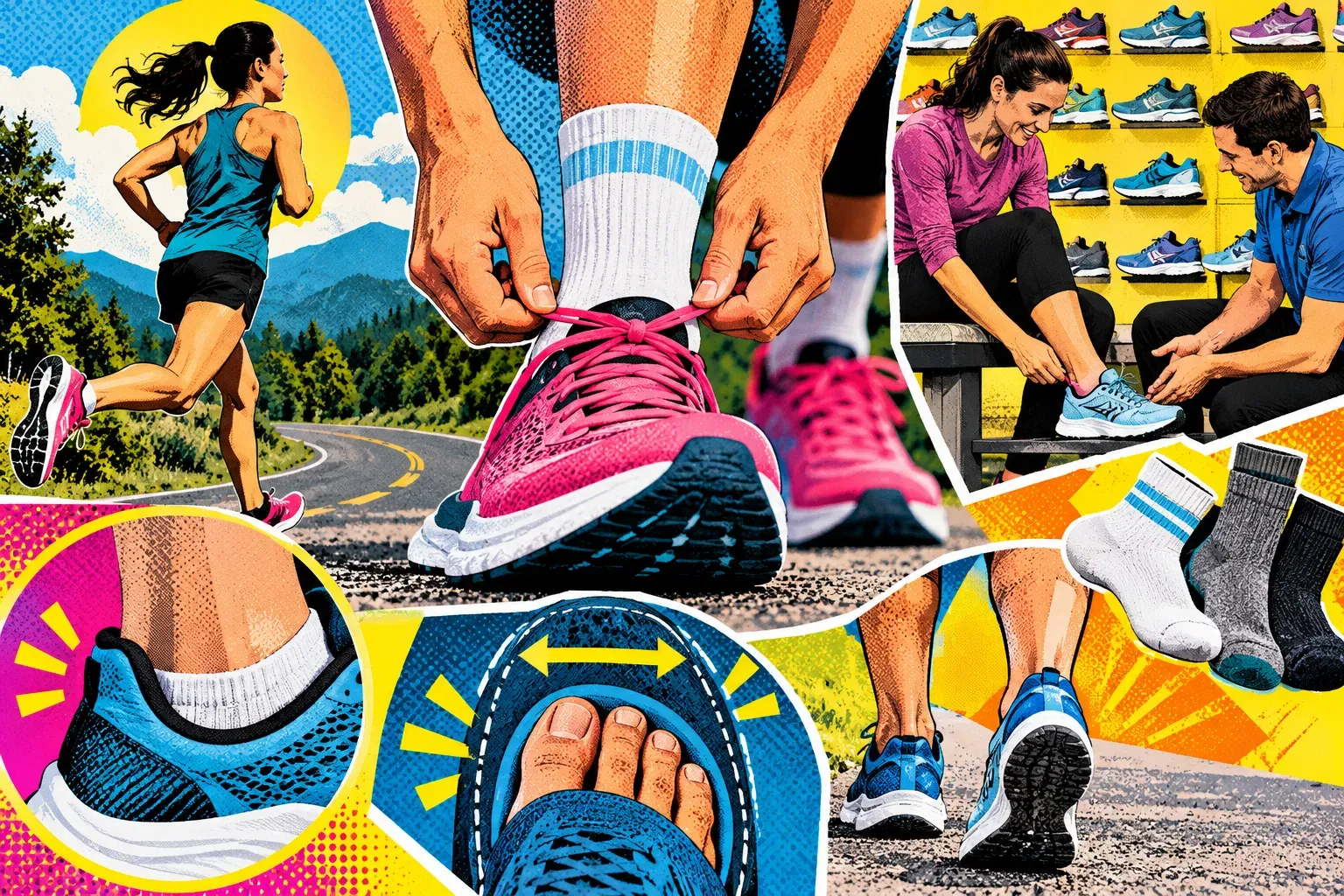
For a North Georgia runner I would try to find a shoe that is appropriate for the runner’s activity and for their feet. This would be a better starting point for a shoe fitting than trying to find the one shoe that will solve all of the runner’s problems.
The athletic shoe fitting guide provided by the American Academy of Orthopaedic Surgeons is a great start for a shoe fitting. AAOS advises that you try on shoes late in the day or after exercise. Wear the socks you plan to use for the activity.
When trying on shoes for a road race or for regular training walks, bring the socks that you plan to wear with the shoes and focus on the shoes themselves during the appointment. Focus on the fit, not the words that first drew you to the shoe.
Start with the activity you have in mind and bring the socks you will wear for it. Try on both shoes and check the parts AAOS names. Then talk about what feels comfortable and what does not.
Its guidance for fitting a shoe calls for a secure heel and enough room in the front of the shoe to move the toes around. The guide specifies at least 1/2 inch beyond the longest toe.
The guide recommends fastening the laces and walking around to assess comfort. Give yourself enough time to do that instead of deciding as soon as you put the shoe on.
Explain the activities you have in mind at the fitting. This column cannot prescribe a shoe or diagnose the source of your pain.
I am a physical therapist assistant. I work under physical therapists. General fitting information is useful, but a person with pain or an injury concern needs a physical therapist or doctor for their own situation.
The promise of a shoe to fix a knee is not something that I would endorse. There is no evidence in this source packet to support such a claim, and the AAOS page did not endorse any of the products referenced.
Price is not evaluated in the packet either. I am not going to turn a lack of prices into a claim that a cheap option is best or an expensive one is necessary. I would want the actual fitting discussion and the actual terms before giving an opinion about a particular purchase. Confidence is useful only if it stays attached to information.
Again, there is plenty of room for personal preference. You can choose to look at shoes that you like the appearance of. You can choose to be interested in a new shoe design. You can ask what supports a shoe’s claims.
I would like to help the reader understand the simple practical steps to use the published guidance on shoe fitting. This would be to establish what the reader intends to use the shoe for, use the socks that the reader intends to wear with the shoe for that activity, try on the pair of shoes and evaluate the different parts of the shoe as outlined by AAOS and then discuss what is comfortable and what is not.
I have no featured product to recommend. I have not tested one for this article, and I have no private result to report.
I would bring the same habits to choosing shoes for a walk around home and for an event. Describe the activity honestly and take time to assess both shoes. Any medical concerns can be addressed in a separate conversation.
Your next best step is to have a proper fitting with the appropriate socks for the activity you are fitting for. Keep the AAOS fitting points nearby and ask questions about the shoes you try. Aim to understand why the fit seems appropriate instead of relying on a technical promise.



Comments