The Journal
Trail Runners or Hiking Boots for a Day Hike
Trail runners or hiking boots for a day hike? Compare weight, tread, ankle coverage, waterproofing and fit to choose the right shoe.
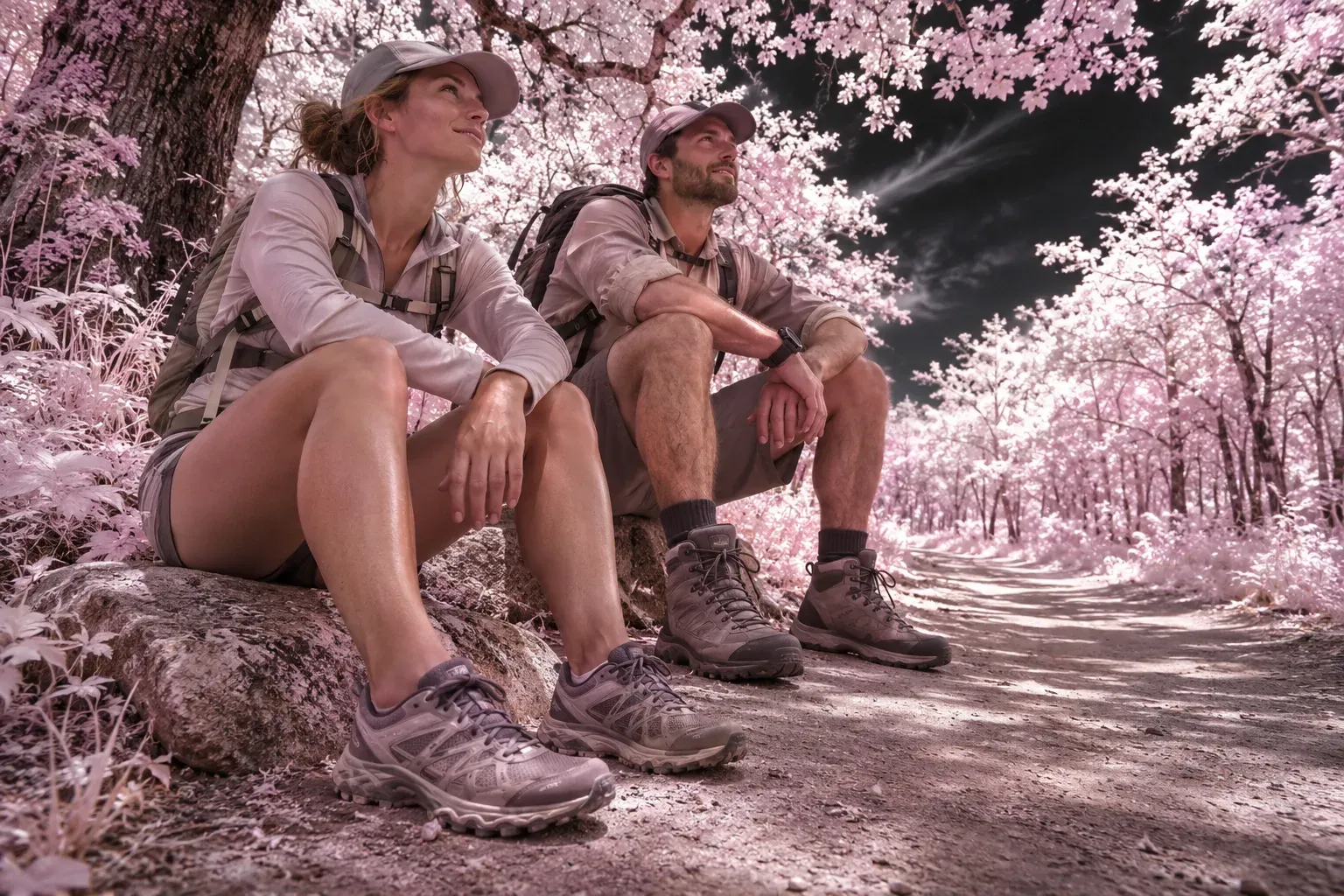
Whether you choose trail runners or hiking boots, the best shoes for a day hike are those that fit your feet and are appropriate for the terrain you will be walking on. Most trail runners are low shoes with flexible soles. Hiking boots, on the other hand, often rise above the ankle and have stiff soles.
Start With the Trail
Most trails are made of packed dirt with some roots along the way. Therefore, you would want a shoe with less aggressive sole than you would for a steep trail of loose stones. This is not to say that the shoe that feels great in the store will feel great after a few hours on the trail. Check the most recent reports for the park you are planning to visit to see if the trail is wet, muddy or even covered with snow.
Trail Runners
The same kind of shoe, a trail runner, can be perfect for a day hiker who prefers to go out in lighter shoes than heavy hiking boots. Many of the newer models of mesh running shoes let heat out as well as dry out quickly after getting wet. They don’t provide as much ankle protection as boots, but you need to check the soles of running shoes, even those designed for trails, to make sure that they grip mud, loose stones, etc. as well as you would like.
Hiking Boots
A boot can offer more protection than a trail runner against loose debris and can have stiffer soles and waterproof linings. They can, however, be heavier and be warmer than a trail runner. No boot, no matter how high, guarantees that you will not injure your ankle and even waterproof shoes can fill with water from above.
Consider Your Pack Weight
When choosing footwear for a day hike, consider the weight of the pack you will be carrying. Try on footwear with the amount of weight you expect to carry on a short walk on familiar terrain. Remember that a heavy pack does not necessarily mean you need heavy boots. Most importantly, make sure that your feet feel secure on the terrain you will be traveling.
Types of Trail Runners and Hiking Shoes
There are many designs of trail runners available on the market today. Some are closer to running shoes than others. There are some with stiffer soles and more protection underfoot, whilst others have deeper tread. A softer, more flexible shoe will let you feel the ground more than a more rigid model but this will also mean that you will notice sharp stones more.
For hiking there are low hiking shoes which can be more like trail runners, and on the other hand there are heavy leather hiking boots with high ankle coverage. For different kinds of ground there can be different types of soles as well. Some people prefer a stiff shoe on loose, broken ground, others find such shoes to be too tiring on long hikes. So, as with other gear, the best is to try them on for yourself in the shop, and not just buy on the basis of their height.
Waterproof or Breathable?
Water protection is a separate decision to make. A waterproof lining may be useful for wet grass, shallow puddles and cold rain, but it does not seal the opening around the leg. So water can still enter from above or from deep water crossings. Breathable, unlined footwear is great in warm weather but your feet will get wet sooner. Take appropriate socks and a dry pair for the journey home if necessary.
How to Check the Fit
To ensure proper fit, try on both styles of shoes with the socks you plan to wear on the trail. Consider the width of the shoe as well as the length. Your toes need room to spread out as you walk and the heel of the shoe must fit snugly so that it does not slide up and down as you walk. If possible, try walking up and down a store’s ramp to see if your toes touch the front of the shoe on the descent, and check to see if there is any rubbing at the heel. If your toes touch, the shoe is too small and will cause you pain on the trail.
Do not expect the shoe to ‘break in’ on long walks after having caused problems on short walks. Some materials can soften up with use but most shoes cause pain on short walks because they are too small in some part of the shoe.
Test Them Before a Long Hike
Try out your new shoes on short walks before going on a longer hike. Look out for hot spots on your feet early on and take supplies for blisters with you. For hikes in the snow and ice, ask the park staff for information about the current conditions on the trails and for appropriate traction devices. No sole is going to guarantee you a slip free walk. See how to prevent blisters while hiking and how to lace hiking boots to stop heel slipping.
Price
Price is another factor to consider when shopping for boots. Just because a boot is expensive does not mean it is the best for an easy day hike on local trails. Consider the type of walking you are planning on doing and then look at comfort, tread, coverage, and weather protection. Remember to leave room in your budget for socks and other items needed for a day hike.
For your own feet, for the weather and for the trail you intend to hike, don’t dress for a backpacking trip for a day hike. Just choose shoes for a day hike that you can get back to your car with.

Comments