
The Journal
Rain Jacket Waterproof Ratings Explained
What do rain jacket waterproof ratings mean? Learn what the mm number measures, why DWR and seams matter and how to pick a jacket that fits.
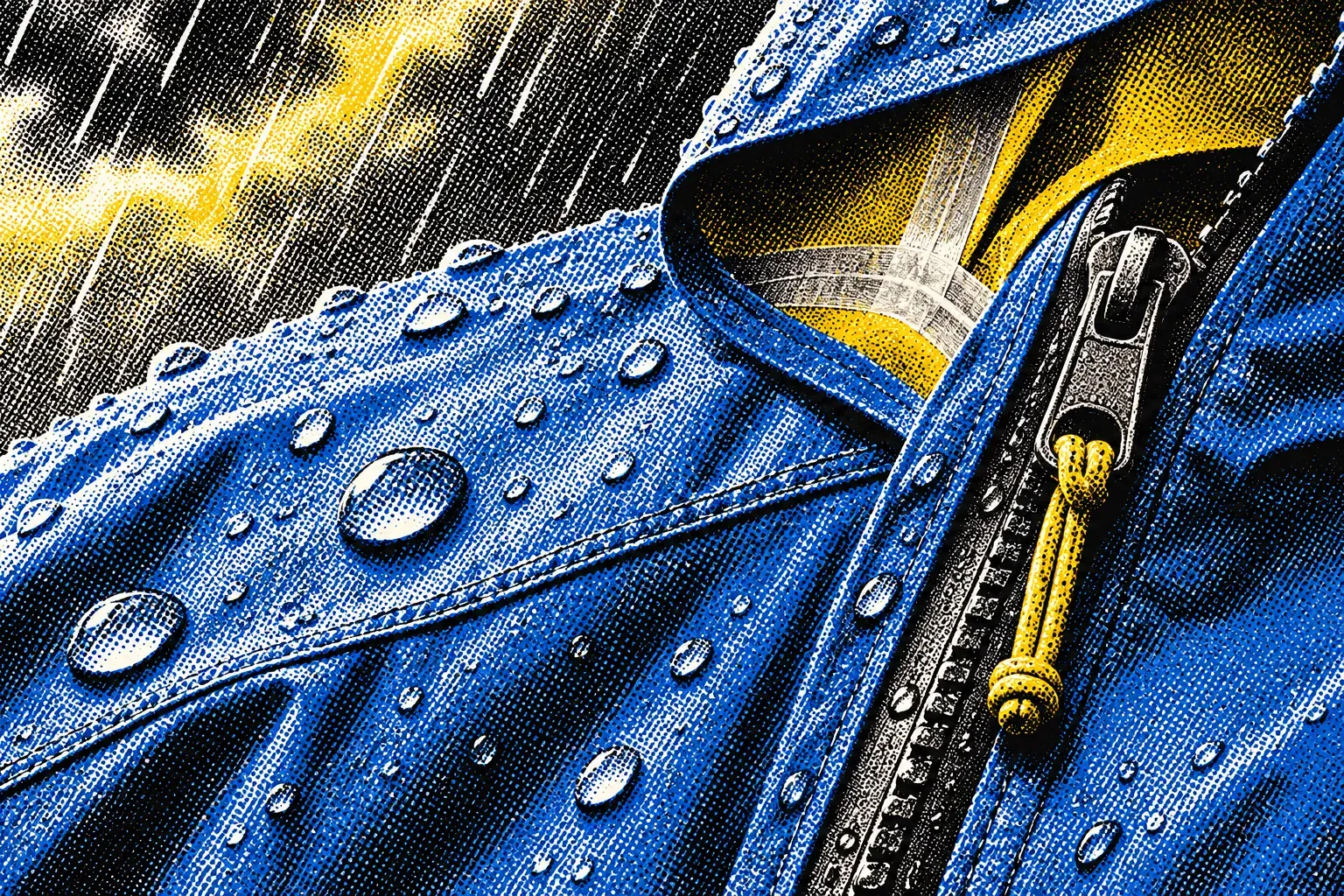
Just because a jacket tag lists a number of features does not mean that the jacket will keep you dry on a walk. Rain jacket waterproof ratings only refer to the fabric of the jacket, and the rest of the jacket, the weather, and how you are using it all come into play.
What the Waterproof Rating Measures
The number on the tag, such as 10,000 mm, is usually a measure of the hydrostatic pressure of the fabric. In a lab, water is applied to the fabric until it penetrates. The height of the water column in millimeters is then the result of the test, and the higher the figure, the more pressure the fabric was able to withstand. So, a rating of 10,000 mm does not mean that the jacket can be submerged in that much water for your walk, and it is not to be confused with the length of time that a garment will keep you dry in rain.
Why Ratings Are Hard to Compare
REI says the various brands of rainwear do not use the same threshold for calling a fabric waterproof. Different tests are used to determine water resistance and each brand publishes the results of their tests in slightly different ways. Therefore, the results of one test on a label can be used for comparison with other rainwear but it is not the only factor that should be considered when choosing rainwear.
Pressure is created on fabric not only by falling rain, but also by pack straps and when sitting on a wet surface with rain pants. Thus, fabric that is suitable for a light shower during a walk on an even path may not be suitable for hours of wind and rain with a pack on your back. When a brand publishes a number for waterproofness, you need to know the test method used.
Water Resistant vs. Waterproof
There is a big difference between water resistant and waterproof. A light wind shell with a water repellent finish is designed to shed water in a light shower, but it is not waterproof in the same sense as a waterproof jacket. The waterproof layer can be a membrane, or a coating, and is incorporated into the jacket in different ways, with different details such as the seams, pockets, zips and the face opening of the jacket.
Jacket Features to Check
Seam tape: This is used to cover the tiny holes made by the stitching of the jacket. Look for the label to say whether the seams have been sealed, and whether all of the seams have been sealed or just some of them. Well shaped hood: It should move with your head and allow you to see where you are going. Try it on over your hat. Cuffs: They should be tight enough to keep out the wind and rain but loose enough to be able to take your gloves on and off with ease. Front zip: It should be easy to do up and down with cold hands. Pockets: Can you use the pockets on the jacket with a pack on your back? Are the pockets on the jacket easy to use?
Breathability
Breathability refers to the water vapor that is produced by the human body during exercise that is transferred through the clothing and then escapes to the outside air. How comfortable you are in a jacket with high breathability depends on the temperature, humidity, the other clothing that you wear under the jacket and how hard you are exercising. The rating does not determine how dry you will stay from your sweat. In very humid conditions walking hard can cause the interior of the jacket to become damp. In these conditions open the vents or slow down to allow the heat to escape.
Durable Water Repellent (DWR) Finish
Many outer fabrics have a durable water repellent (DWR) finish to the fabric, allowing rain to bead up and roll off. This finish can become saturated with water and feel clammy, however, this does not necessarily mean that the waterproof layer of the jacket has failed. Clean the jacket according to the care instructions for the jacket and if the finish needs to be restored then follow the maker’s instructions for the treatment. Do not use an unapproved treatment as all fabrics are different and some may not respond in the way that you expect.
Beyond the Jacket
In addition to your rain jacket, consider the other clothing you wear on your walk. Rain running off your jacket can run down your pants; water can penetrate at the cuffs of your pants; or water can penetrate from below such as in wet brush. Longer periods of exposure to steady rain require more protection and a strategy for staying warm if the clothing gets wet, so for longer wet trips, you should consider rain pants, suitable footwear and a dry insulating layer to be packed in a waterproof bag. For a short neighborhood walk to the nearest shelter with dry clothes at home, simple water resistant layer may suffice.
How to Test the Fit
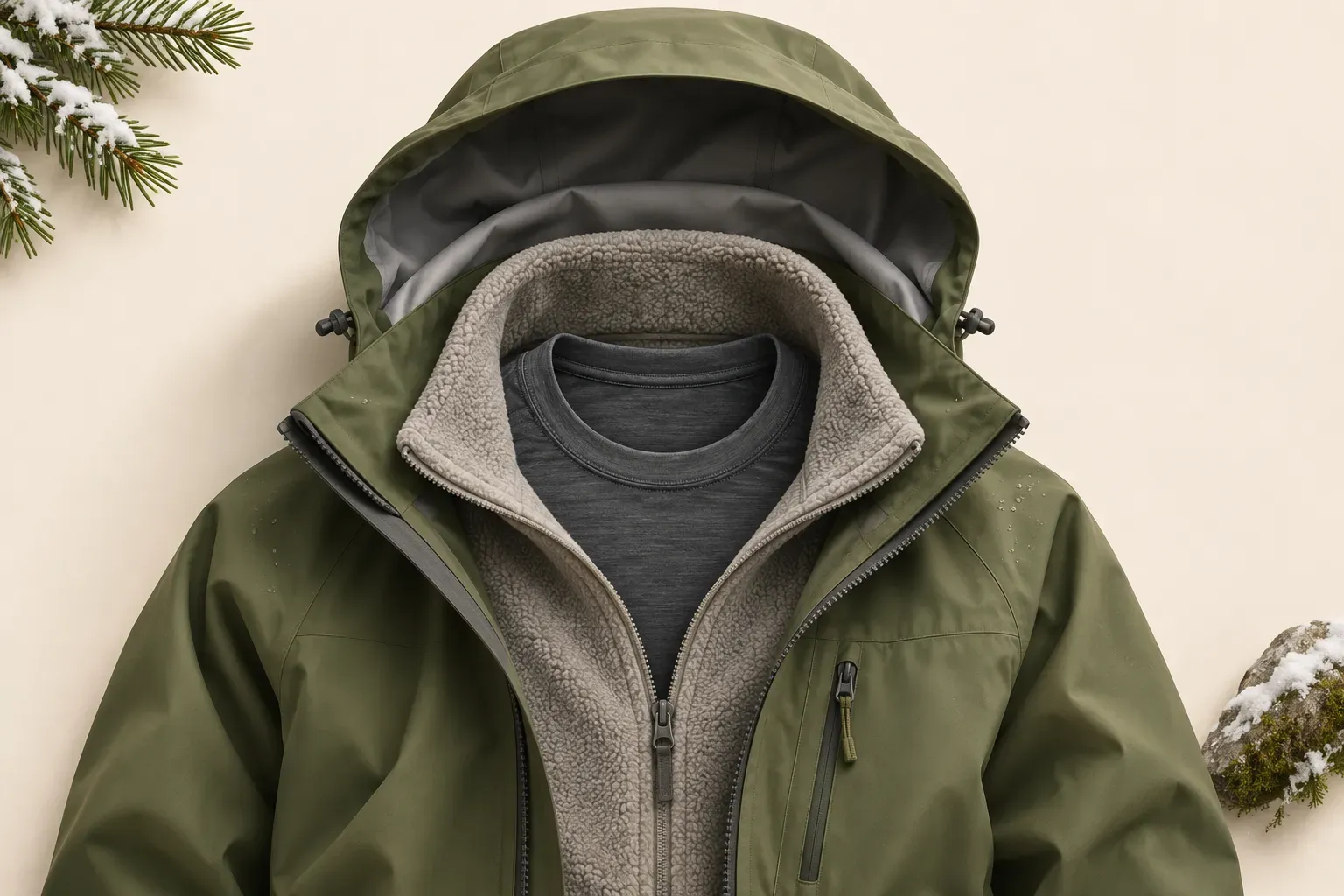
Make sure you try on the jacket in the size you intend to wear it. If you plan to wear a fleece under the jacket then try on the jacket with the fleece under it as well. Reach up with your arms as if you are going to put something on the roof of your car. Bend down as if you are going to pick something up off the ground. Turn your head from side to side as if you are going to look out the window. Does the hood fall over your eyes? Do the sleeves pull back when you reach for something? Read the return policy for the store and the care label for the jacket before you buy.
Jacket Layers, Pockets and Weight
The number of layers of a jacket, i.e. two, two and a half or three, are more of a classification of how the waterproof or breathable material is combined with the outer fabric and the interior lining or protective print. However, this does not tell you whether the jacket is suitable for your use. Look at the inside of the jacket and find out how it feels and what features it has for use in the conditions that you expect to encounter.
Pockets and vents can also behave differently when worn with a pack. The hip belt can cover up the opening of a pocket, for example. Also, the shoulder straps of a pack can cause the high collar of a jacket to sit in an unusual position. Therefore, it is always a good idea to try on a jacket with a loaded pack, if possible. Also, try opening and closing the vents and see if the zipper pulls are easy to use.
The weight of a shell is another factor to consider in the pack. Lightweight shells take up less room, but the fabric and construction must be sufficient for the intended use of the shell. A heavier jacket may have features that are more useful to you such as a more substantial hood or more pockets. Do not be misled by the weight of the jacket and assume that it will last for a long time. Care, abrasion, and use are more important factors to determine the life of a jacket.
Repair Before You Replace
When looking to buy a new jacket, inspect your current jacket first for any damage to the seam tape, tears in the fabric or worn out closures. It may be that a simple repair or a retreatment of the water repellent is all that is needed to bring your current jacket back into use. Also, wash the jacket according to the care instructions and test the fit of the jacket with the other layers that you intend to wear underneath.
Planning a Wet Walk
When planning your outing consider more than just the jacket. Place the shell within reach before the rain starts. If you are getting cold and the wind is starting to take out the fun of the outing then turn back and seek shelter. The rating of the fabric cannot determine when you have had enough of being out in the elements.
When choosing a jacket, buy for the weather you expect to be out in, the fit you need, and the amount of time you expect to be out in the rain. Don’t expect too much from the waterproof rating of a jacket.


Comments