
The Journal
Reflective Gear and Lights for Walking After Dark
Walking after dark? Learn how headlamps, flashlights and reflective gear work together so you can see your route and drivers can see you.
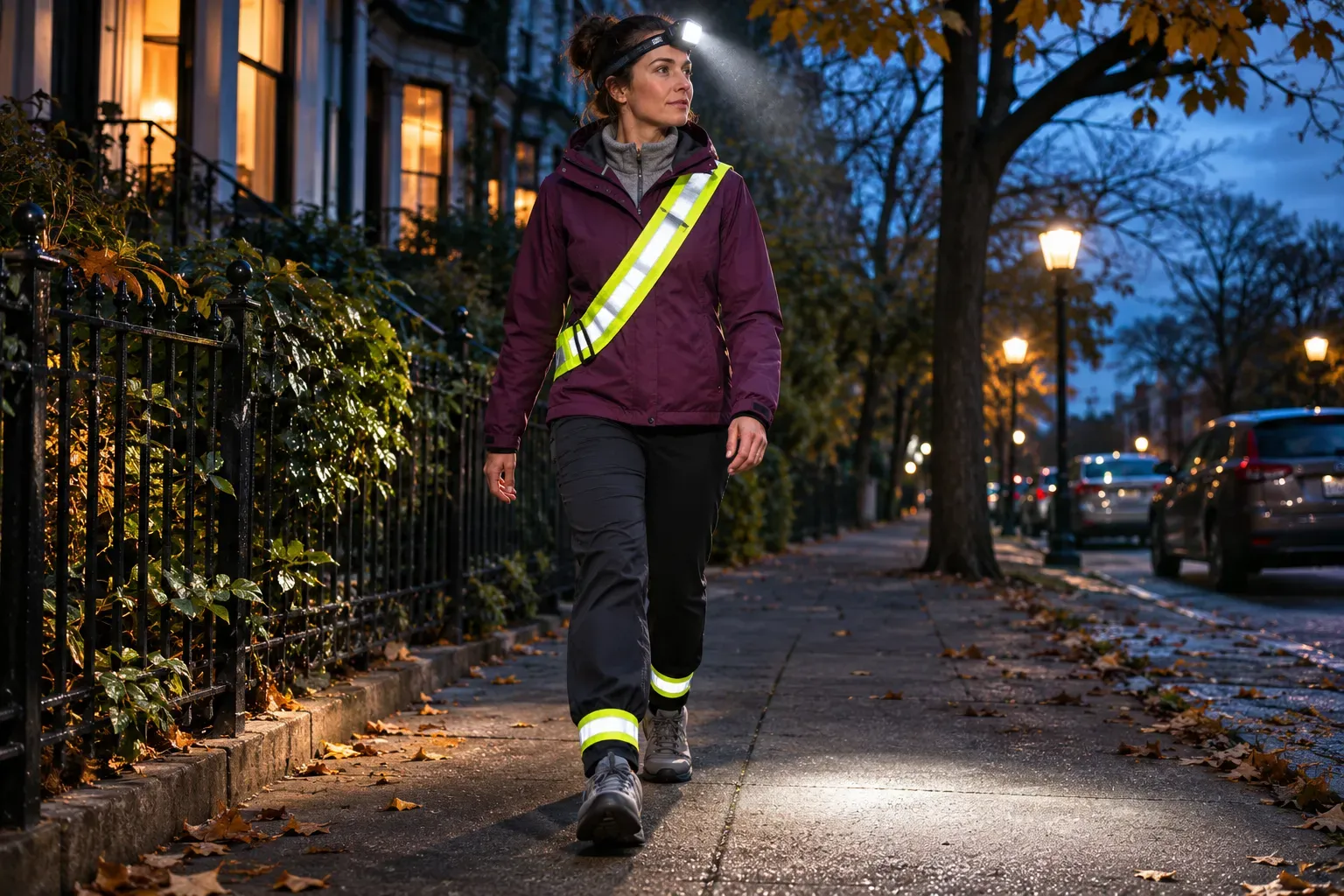
A light helps you see where you are walking on the sidewalk. Reflective material helps drivers to see you with the light from their headlights. This is why you need both types of gear when walking after dark. Runners can find more in how to run safely in the dark.
Check Your Route in Daylight
Look at your planned route for your night time walk during the day. This will help identify broken pavement, curb ramps, unlit crossings and other obstacles such as narrow sections of pavement where vehicles are parked on the side of the road. Ensure that your light is suitable for the surface you will be walking on and plan an alternative route home should your light fail or weather deteriorate. If you’re heading out to look at the night sky, how to plan a stargazing walk covers using a dim red light at the viewing spot.
Headlamps
Headlamps are great as you can keep both hands free, i.e. when using a cane, carrying bags, pushing a stroller, etc. Ensure that the strap stays in place and that the lamp can tilt towards the ground. Test the switch with cold hands or while wearing gloves. A wide beam will help illuminate the area in front of you while a narrower beam can illuminate the route ahead of you. Most lamps have multiple settings, so be sure to test them before going out for a walk.
Handheld Flashlights
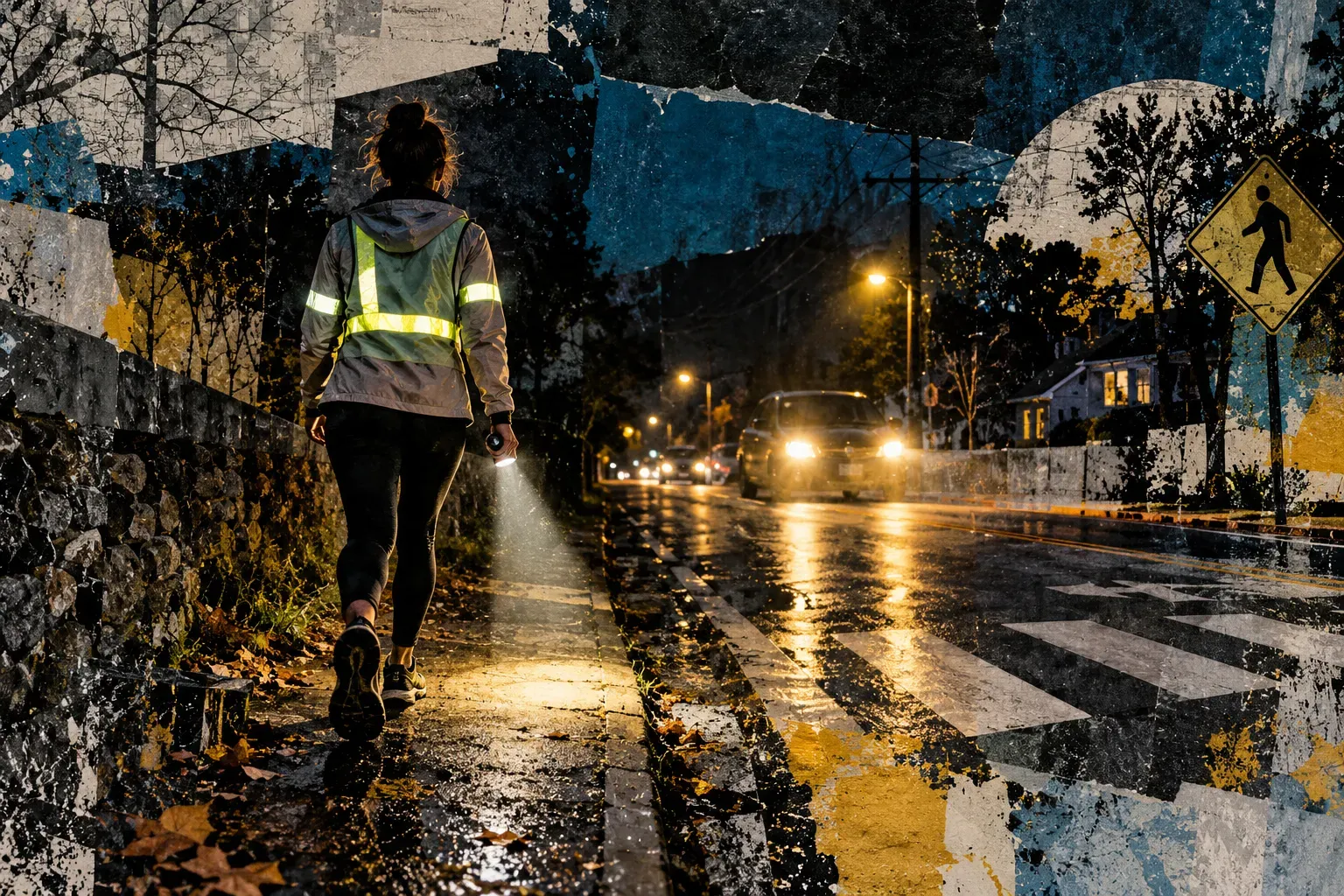
A handheld flashlight is another option to direct the beam to where you need it to go. It can be easier to point at a curb or sign than to look up with a headlamp. It does require use of a hand which can be awkward if you are using a cane, carrying a bag or holding a child’s hand. Just be sure to aim the light where you need to go to see the route, not into the eyes of other pedestrians or cyclists.
Reflective Gear and Where to Wear It
Reflective material, whether it be a vest, sash or bands, reflects light back to its source, so it needs light from another source to be of any value. It must be on the front, back and sides of your clothing in order to be seen from all angles. Bands around the ankles or wrists, or on the arms and legs, help others recognize that you are a person on the move, but wear them in such a way that they do not get in the way of your feet. Just make sure that your backpack, coat or scarf is not covering up the reflective material on your gear. A reflective patch on the sleeve of a jacket, for example, would be hidden under a backpack strap.
Batteries and Charging
Make sure you have enough power for your light. Some use normal batteries, others charge via USB cable. Cold weather as well as the setting you chose can affect the light time. The manufacturer’s estimate is just a rough guide for your outing. Always charge your light before going out for a walk and take along extra power or even a second light for very dark sections.
Lights vs. Reflective Material
An active light and a reflective surface can both work to help you be seen by other road users, in different situations. An active light can be on even when there are no other headlights about, and a small light can be visible before a vehicle’s headlights reach you. A small rear light can be of use, as can a front light to help you to see where you are going. Check local laws, though, as some settings can be dazzling to other road users. Reflective material does not require any batteries, but it does require a beam of light to reflect off it, so on its own it is not enough to make you visible on a dark path. Use both where appropriate.
Bright colors help other people see you during the day, but the National Highway Traffic Safety Administration recommends reflective material and a flashlight for night use. Be sure to test out your set up with a friend or family member on a safe route before you use it on your own. A reflective vest or even broad reflective bands are better choices than a small reflective patch.
Walking With Family or a Group
Make visibility part of everyone’s clothing for family and group walks. Don’t assume that one adult in reflective clothing makes children more visible from the front, back and sides of them. Test the light to make sure it is comfortable to carry and that straps do not create a tripping hazard. Keep children close to you when crossing the street and follow the same route as for supervised walks with them.
Choosing a Safer Route
In choosing a route for your walk, try to pick one with sidewalks and use the available crossings. If there is no sidewalk and you must walk on the road, then the agency recommends that you walk facing traffic and as far away from the traffic as possible. Be aware of turning vehicles at intersections and use caution when crossing the street.
Choosing Gear on a Budget
Just because something is more expensive doesn’t mean it’s better. A simple flashlight and reflective vest can be more effective than some of the more expensive items on the market. Be sure to look for features such as adjustable sizing, simple controls and a power source that is easy to maintain. Keep your gear near the front door so that you can easily check it after adding extra clothing such as a coat or bag.
The best solution is the one that you will actually use and wear each time you go out. Make sure it is charged up and use it to help you see where you are going.

Comments