
The Journal
What Is a Trail Race Aid Station?
Learn what trail race aid stations offer, how drop bags, crews and pacers work, and what to check in the race guide before your first trail event.
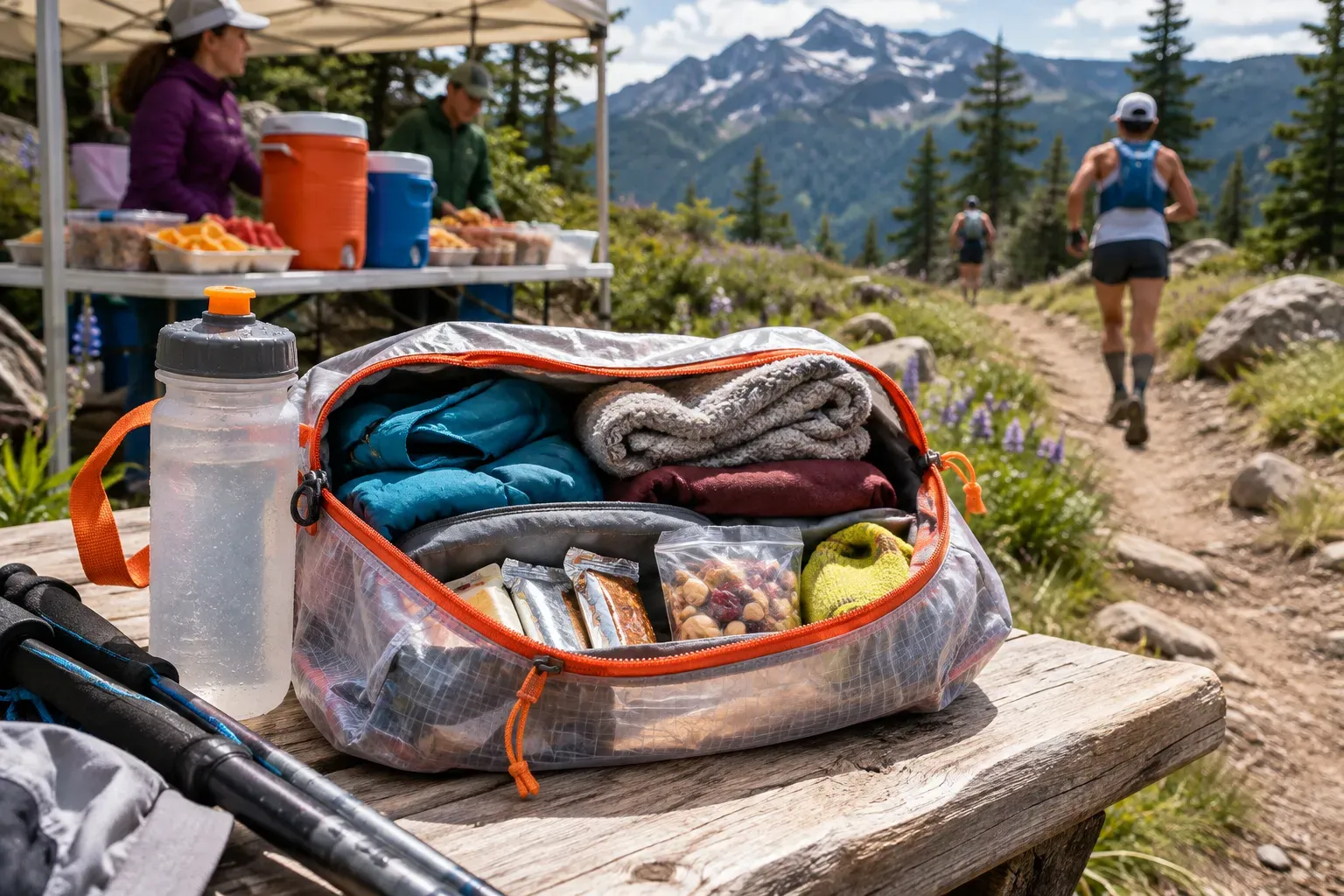
An aid station is a location on a race course where participants can get the aid or supplies described by the race organizer. In a trail race, that could be anything from a simple water stop to a fully staffed station with food, drinks and space for runners’ approved crews to meet them.
Before you start, read the event’s own guide. It tells you what the organizer plans to provide, how far apart the stops are and what support is permitted. A good plan still allows for a supply running out or conditions changing.
What Might Be Available?
Water and Food
Water, drinks and food are often available at aid stations, but each event is different. Do not assume your favorite drink or food will be there. Check the race’s required gear list and carry what it asks for.
Volunteers and Course Information
Aid station volunteers can direct runners on course and explain how the station works. Ask where the next aid station is and what to do if you need help. It is not a volunteer’s job to change the race rules for you.
Event-Specific Supplies
Some races describe additional supplies or services in their guides. A station’s appearance in the schedule is not a promise that it offers every service. Look for the differences between water-only stops, staffed aid, medical assistance and crew access.
How Are Trail Aid Stations Different From Road-Race Water Stops?
A trail aid station provides on-course support, much like a road-race water stop. A trail station can be farther from the next stop, though, or offer different services. Neither kind has a universal supply list, so compare your own events rather than relying on a label.
| Question | Road-race water stop | Trail-race aid station |
|---|---|---|
| Location | Specified by event | Specified by event, sometimes on remote terrain |
| Supplies | Often focused on drinks; check the guide | Can range from water to broader support; check the guide |
| Crew or drop bags | Event rules apply | Event rules and designated locations apply |
| Distance to next support | Check the course plan | Check the course plan and terrain |
This comparison describes possibilities, not promises. The Vermont 100 FAQ is one organizer’s example of event-specific rules. It reflects the 2026 race; other events can use different plans.
Two Organizer Examples
The Vermont 100 race details describe the 2026 100K as having 16 aid stations. The organizer says unattended stations provide water and electrolyte drink, while staffed stations carry standard aid-station food. Runners without a crew can send drop bags to crewed stations. Crew assistance is limited to designated crew stations. The 2026 FAQ lists the bag deadline and labeling instructions.
The Western States aid-station chart for the 100-mile ultramarathon separates medical services, drop bags and crew access. Its current guide lists Lyon Ridge at mile 10 with no crew access, and Red Star Ridge at mile 15.7 with drop bags but no crew access. It allows one runner drop bag per aid station and does not allow separate pacer drop bags. Its participant guide is labeled 2027, so use it as a rule comparison and check the guide for your own race year.
| Question | Vermont 100, 2026 information | Western States current published guide |
|---|---|---|
| Station supplies | 100K unattended stations list water and electrolyte drink | Check individual station descriptions |
| Drop bags | Uncrewed runners may send bags to crewed stations | One runner bag per listed bag station |
| Crew | Designated crew stations only | Access varies by checkpoint |
| Pacers | After second Camp 10 Bear passage, with an age exception | Separate pacer drop bags not permitted |
These are examples, not rules for your race. A race may update its handbook after a page is published. Some formats work differently again: a backyard ultra brings runners back to the same starting corral every hour, with a few minutes between yards to restock.
What Are Drop Bags?
A drop bag holds items you arrange to pick up at an approved point during the race. The organizer decides whether drop bags are accepted, which aid stations will have them, how they must be labeled, when they must be dropped off and how you collect them after the race.
Do not pack a bag on the assumption that it will be at every aid station. Read the race’s current instructions and carry any required items on course. A bag that arrives late or is hard to find is a reason to have a backup plan.
Crew vs. Pacer vs. Volunteer
A crew member supports a particular runner during a race. A pacer runs with a runner for part of the race, where the rules allow it. A volunteer works the event to support all the runners. One person should not assume they can fill every role, and a race can limit crew locations or prohibit pacers altogether.
Tell your crew where they can meet you on course. Give them the official directions and a way to check for updates. Do not send your crew to an aid station the organizer has closed to outside access.
How to Plan Your Aid-Station Stops
Read the event’s current course guide from start to finish. Identify each aid station, its distance from the previous station, its cutoff time and the services it provides. Consider the elevation gain and loss and the terrain of each section as well as the mileage. A short distance on difficult ground can take longer than the same distance on a smooth road, which is one of the first things a first trail run teaches.
For each stop, list what you plan to do, such as refilling a bottle, checking supplies or meeting your approved crew. Check what the race requires you to carry between stations. This is a logistics worksheet, not a prescription for how much to drink or eat during the race.
| Planning field | Your race information |
|---|---|
| Station and distance | __________ |
| Distance and terrain to next station | __________ |
| Published supplies | __________ |
| Drop bag or crew permitted | __________ |
| Cutoff and required equipment | __________ |
| Backup if an item is unavailable | __________ |
Read the Station Chart as a Sequence
Start with the distance from the start of the race to the first station. Subtract each station’s distance from the next one on the list to find the distance between them. Read the symbols or columns for every station. A station that accepts a drop bag may not allow your crew, and a crew point may have a vehicle limit.
Check the cutoff definition too. Some organizers require a runner to leave a station by the published time rather than merely arrive. The official guide controls. Write the rule next to the number so you do not have to reconstruct it while tired, and plan your pacing between stations with those cutoffs in mind.
If you are meeting someone, give them the official race directions and the meeting location. A map app may not know about race-day restrictions. Agree on what you will do if you miss each other, and follow the race’s rules for outside assistance.
Aid-Station Etiquette
Follow the volunteers’ instructions and keep the route through the station clear. If the station has a serving process, ask before reaching into shared supplies. Dispose of waste where the organizer directs, or carry it until you find an appropriate place. Thank the volunteers, then move on so other runners can reach the table.
What If an Aid Station Is Missing Supplies?
Ask the volunteers what they have. If they don’t have what you need, check the event instructions for what to do. Do not assume the next aid station will have it. Carry any mandatory equipment and plan around your own needs and the race rules. If you need help on course or decide to withdraw, tell an event official and follow the organizer’s withdrawal process.
Frequently Asked Questions
Do all trail races have aid stations?
No. Check your race’s support plan and required equipment.
Are drop bags included?
It varies from race to race. The race guide will say whether drop bags are accepted and where they can be sent.
Can family members help?
Only where the event permits outside support. Crew access can be restricted to particular stations.
Can I refill a hydration bladder?
Check with the organizer how the aid stations are set up and what water each one has. Do not assume you can refill a hydration bladder at every station.
Are pacers always allowed?
No. Rules differ by event and distance.



Comments