Summer in Town Does Not Clear a Mountain Trail
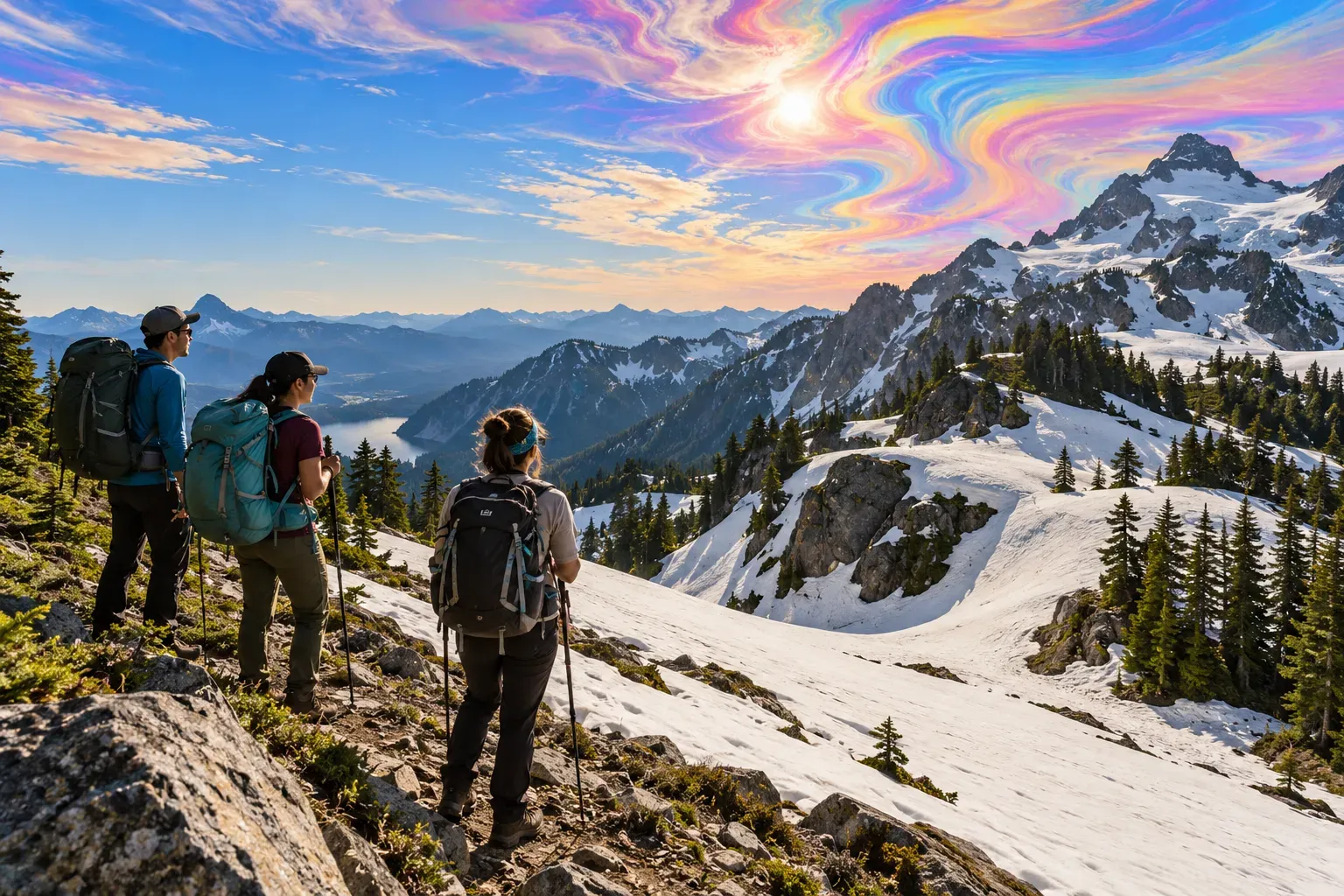
The calendar can say it is summer and it is warm at home but that does not mean the mountain trails are clear of snow. I would like to know the conditions on the route that I am planning on hiking before I choose a Pacific Northwest day hike.
The Washington Trails Association’s early summer safety guidance describes the difference between lowland summer and mountain summer. WTA recommends recent trip reports, land manager information and mountain forecasts for choosing a destination.
I would start by naming the route. A specific route gives me something to compare with a trip report or a manager’s notice.
Next, I would check the date of the report. A clear trail in another season does not mean the same trail is clear now. I can look at the photographs from previous seasons but that does not necessarily mean that the conditions are the same. As a librarian, I would expect to find out when the information was gathered.
Read the entire account, including the conclusion. The writer may have reached the destination through conditions that do not match your group’s skills or aims. That does not mean you have to accept the route as a recommendation.
Another source of information about a route is the manager’s information for the agency that manages the land through which the route travels. WTA recommends checking the relevant agency and contacting a ranger station when needed.
I would want the mountain forecast for the planned hiking destination. WTA recommends checking the weather for hiking destinations rather than for towns and cities in the area. This would give me the most relevant information to help determine whether there are any potential problems with the day’s planned route.
Snow can hide the trail and make crossings hazardous. A summer route description may assume the trail is visible. The route description should be viewed with skepticism, especially if it appears to be based on the trail being visible.
Another consideration for lingering snow is the NPS winter hiking guidance regarding the use of other people’s tracks. Footprints show that someone went somewhere. They do not establish the destination, the judgment involved or whether following them suits the group.
This can be particularly useful for people who do not like to look uncertain. Footprints can tempt me to avoid admitting that the route is no longer clear. I would rather stop and acknowledge the information problem.
The simple knowledge of a trail name does not equal understanding of the present route. Just because one has researched an outing for a day hike does not mean that everything will go according to plan. Good preparation allows for the unexpected.
WTA gives particular attention to steep snow with hazards below it. Appropriate skills and equipment matter, but equipment does not guarantee a safe crossing. This column is not intended to teach you how to cross such slopes but rather to help you understand the information that you need to make such a decision.
The attractive sight of dry ground beyond a snow covered section is not an answer to that problem. A destination can be visible and still be the wrong aim for the day. I would keep the decision focused on the actual crossing and the capabilities of the people involved, instead of letting nearness supply its own argument for continuing.
I would like to reiterate that owning some gear is not the same as being able to use it. WTA’s guidance is useful for this reason. A purchase cannot replace judgment about skills, terrain and conditions.
The NPS advice includes checking the current conditions and avalanche information with the park. This would be a question for current sources of information, not something that can be answered by a general column. Whether or not a route is free of avalanche concerns on a given date cannot be determined from a sunny picture and a report that the route was “easy” to cross.
The planning decision should include the whole group. Everyone has to travel the route, even if the most confident person chooses it. I would discuss the conditions before departure, including what would cause us to change the outing.
I take family walks and go on solo hikes as well. When I go alone, I leave a written plan with Nate. When I plan with others, I want us to choose the outing together.
For a day hike, treat the alternative destination as a real option rather than something that is “given up on” and therefore unavailable for use by others. Treat the alternative destination with the same respect for current information as the first choice. Do not choose the alternative simply because it sounds lower or easier.
Instead of asking whether we can preserve the first plan at any cost, I want to ask which supported plan fits the day. It leaves room for the mountain information to matter. It makes the conditions check part of choosing the outing rather than a ritual performed after the choice is effectively final.
When you arrive at the trailhead, compare what you expected to find with what is actually there. If there is a notice at the trailhead or if you encounter unexpected conditions on the trail, change your plans as needed. Don’t let the distance that you have already driven be a factor in deciding whether or not to cross a particular section of trail.
The reason for the information must be clear so that others can understand your reasoning for continuing on the planned route or not. Therefore, there should be enough practical information available so that you do not have to rely on memory for details of the route information that you have consulted for planning the outing.
I would also like to leave room for the decision of turning around to be made on the trail. WTA and NPS both suggest that it is wise to be willing to turn around on a hike. To me, this is part of planning an outing and not something that must be admitted as failure on the trail. If the conditions on the trail are different than those that the hiker had planned for, then the hiker must adjust their plans for the remainder of the hike.
But I would like to avoid making the decision to turn around on a trail sound like a moral decision on the hiker’s part. It is simply a practical decision based on information that the hiker acquired on the trail. A hiker who states that a section of trail is beyond his or her comfort or skill level is contributing valuable information to the group’s decision making process.
Also, consider the return for the day hike. An appealing destination is only part of a day hike. The plan should account for the walk out and the walk back.
This is not to say that the mountains are closed to people without years of experience. Rather, recognize the skills that you don’t have and plan your outings accordingly. A different outing or learning new skills can be a better choice.
This same care can be applied to experienced hikers. While they may have more familiarity with a certain area, that does not mean that they can’t change their plans in the face of current information. This is what I find so useful about conditions on the trail: they belong to the outing being planned, not to a person’s preferred account of their experience on the trail.
After a hike, WTA encourages hikers to contribute reports. I prefer when these are very precise about date, route, and conditions experienced. It does not have to be a report of great bravery, just what you experienced on the trail and how that would relate to other people’s plans for the day.
My plan for the next summer day in the mountains would start with the name of the trail, the most recent accounts, the land manager’s information for the trail, and the forecast for the day. I would plan the trip with the whole group in mind and leave the possibility of turning around on the trail as part of the normal decision making process for the trip.

Comments