A Dog Friendly Hike Begins With Permission
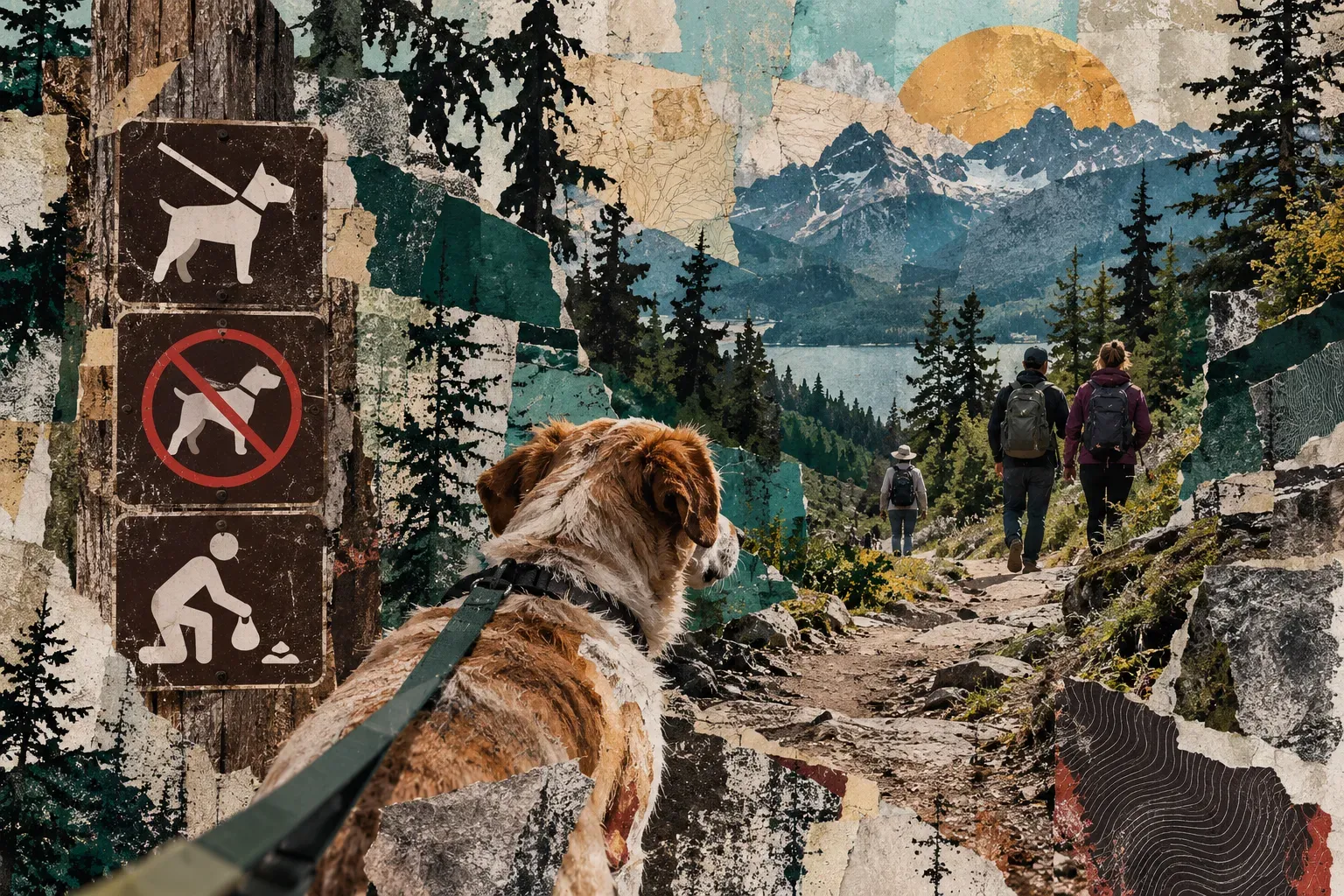
A friendly dog and a dog permitted trail are different things. I would begin a Pacific Northwest hiking plan with the second question. Wanting your dog with you does not mean dogs are allowed everywhere. Other hikers may prefer to keep their distance.
First, check the land manager’s rules for your intended trail. Find out whether dogs are allowed and what leash rules apply. WTA’s dog hiking guidance is a great place to start, but that information is general and may not apply to every trail in the region.
The exact route matters. A general plan to visit a park does not settle the permission question. I would name the trail, identify its manager and read the relevant rules before deciding to bring a dog.
Olympic National Park is a great example of this. On their day hiking page they list the various trails within the park and note for each trail whether or not pets are allowed and if so on what leash. They list out the exceptions to the general rule of no pets on trails in the park. This list of exceptions should remain a list of exceptions and not be turned into a blanket permission to take your dog on any trail in the park.
The Pacific Northwest is the region of this column, not a single trail manager. A general label is good to help you find more information, but is not the full legal or practical story for the specific path you plan to take.
These are considerations for deciding whether or not to take your dog on your planned hike, not for deciding whether or not your dog is a good dog. I am not using a household pet as evidence for this account or inventing one to provide a warmer beginning to this account. My concern with this subject is as a person who goes for walks and values the shared use of public lands.
I am not using a household pet as evidence for this account or inventing one to provide a warmer beginning. I care about the subject as someone who walks and values shared public spaces. The rules and the courtesy apply to the plan whether the reader owns a dog, walks beside one or prefers to keep some distance.
After permission to take your dog with you on the hike has been established, the next consideration for the outing is how to handle interactions with other trail users. This can be as simple as beginning with the recommendation from the WTA dog hiking guidance for hiking in harmony with dogs, such as keeping your dog on a leash and giving other trail users plenty of space to pass on the trail.
The leash can be an obvious indicator of the handler’s responsibility. Whether the owner loves and trusts their dog is not the point. The other trail user should have room to pass without having to explain a preference for distance.
WTA’s guidance for dog handlers on trails with dogs says that dog handlers should yield to other users on the trail. That is how I think of passing other users on the trail as well. A narrow trail is still shared. A preferred pace does not erase the need to make space for others.
I am not suggesting a specific course of action such as walking down a ledge with your dog or walking into the vegetation to allow other people to pass. The source gives a responsibility, and the setting matters when carrying it out safely.
When meeting a person with a dog on the trail, WTA recommends asking the handler if it is okay to greet their dog. This is very clear and can be applied in many situations on the trail. Someone managing a dog may need space and attention for that task, rather than an unexpected greeting.
The same courtesy extends to someone who does not want to interact. An assurance that a dog is friendly does not mean another hiker wants an interaction. The hiker’s preference for distance should be respected as well.
This does not require inventing a frightening encounter. The fact sheet supplies no complaint, incident or confrontation, and I have none to add. I think the ordinary case is enough to discuss. Several people can have different preferences on the same trail without any of them needing to become the villain in a story.
There are many responsibilities of the dog owner on the trail. One is to pack out any waste that your dog may have created on the trail. WTA recommends carrying waste bags and packing them out, rather than leaving a bag beside the trail for collection later. I consider carrying the bag out part of the outing.
I prefer a plan that says what the handler will carry. A promise to collect a bag later still leaves it on the trail in the meantime.
A family with children going on a day hike would want to review the dog permission check, the leash requirements and the waste plan for the trip. These are responsibilities of the dog owner and would need to be addressed by the handler(s) of the dog(s) on the trip. Who will be responsible for each of these tasks should be addressed prior to leaving for the trip.
This is a planning suggestion, not an account of my children hiking with a pet.
As with any hiking with dogs, there are many questions regarding the health and condition of the dog. This packet does not contain any veterinary information. It does not list the amount of water that a dog should have, nor does it list any criteria by which to assess the physical condition of a dog. I would not fill those gaps with a rule borrowed from human hiking.
Again, someone planning a longer or unfamiliar outing may have additional questions. That is why they need to go to the appropriate source for information and not rely on a short etiquette article for all of their preparation. This packet is intended to provide useful information for readers, not a complete list of all of the information that would be needed for a hike.
The day of the outing, current notices and trail signs can be checked after having used online research for planning the route. Old saved information about a trail can serve as a guide but the current rules for pets on a trail are what is important to know.
I would like to make the discussion of public hiking information regarding dogs to be as inviting to as many people as possible. Some people like to have dogs with them on hikes, and some people do not. I want to make sure that people who do not want to interact with dogs on the trail are given as much consideration as people who do want to interact with dogs on the trail.
This does not mean that every person will like every encounter with every dog, and that is not the goal of courtesy. The goal of courtesy is to have people take responsibility for the things that they can control and to consider the comfort of other people on the trail.
The practical reward of planning out the responsibilities of the dog on the trail is that there will be fewer unknowns on the outing. The chosen trail permits the dog under known conditions. The handler of the dog has thought out the issues of passing other people on the trail and the waste that the dog creates on the trail. Other hikers on the trail can choose whether or not to interact with the dog on the trail.
The WTA dog hiking guide also lists the items that you need to take on the trip such as water and a bowl, a leash and collar, waste bags and identification. It also warns that you cannot rely on there being water on the route. I would consider these supplies before the outing.
Who is going to carry the water, the bowl, the leash, the collar, the waste bags and the identification of the dog? This is a responsibility issue, not a quantity issue of water for the dog. The WTA source for this packet has prompted the question of supplies for the dog on the trail, but the source has not provided this column with an individual assessment of an animal.
The WTA list of supplies includes identification for your dog. Again, the details of what you need to take on your hike with your dog are best left for you to research, plan and prepare for before you leave on your hike.
For the next day hike that will be suitable for you and your dog, start with the exact route you have chosen and research the current rules of the manager of that land. Then incorporate the leash, the passing other people on the trail and the waste that your dog creates into your plan for the day’s outing. A friendly dog can be a welcome companion on a hike where dogs are permitted on the trail.


Comments