A Clear Stream Is Not a Drinking Water Plan
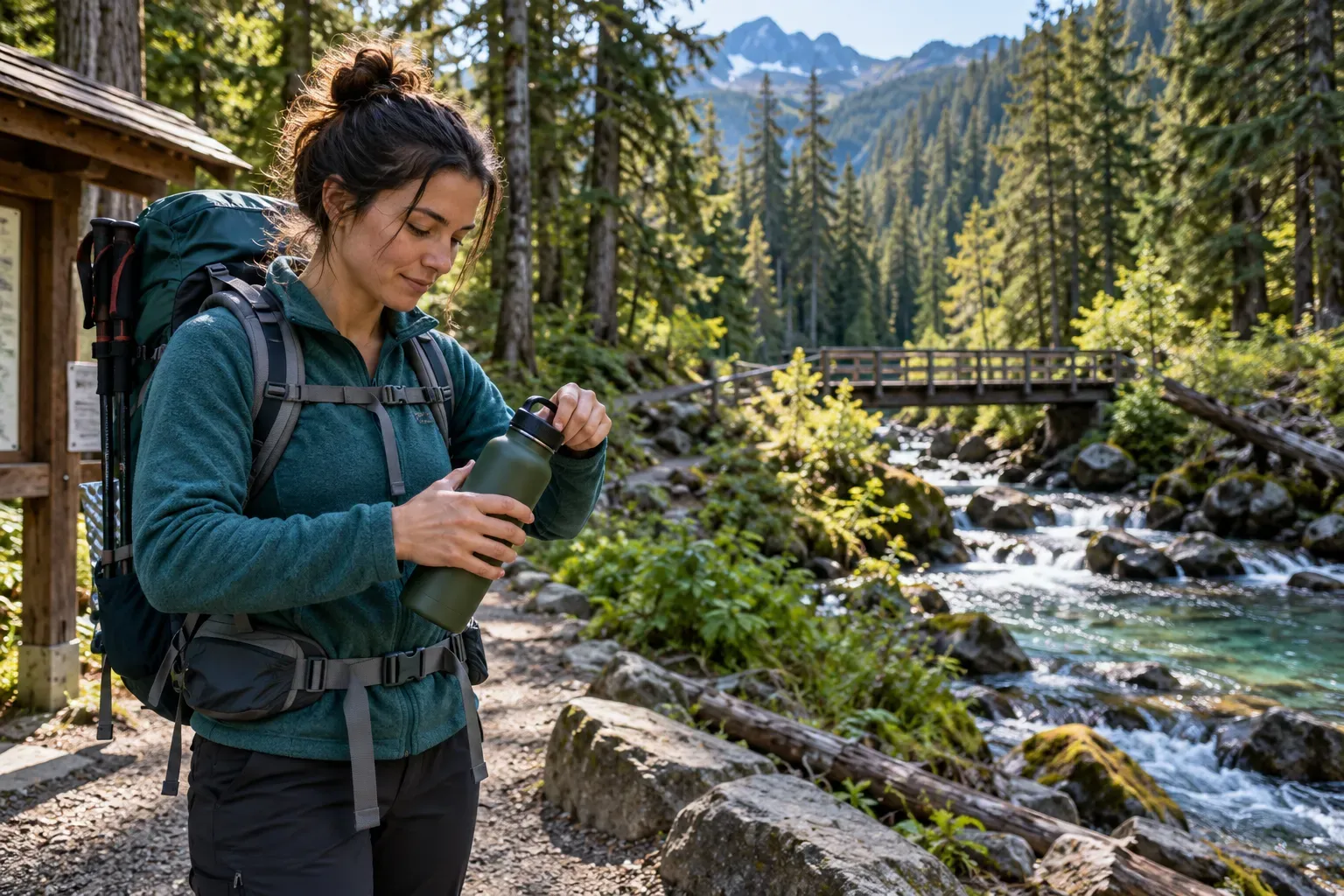
I would like a day hike water plan to be settled before a stream becomes tempting. Clear water can be lovely to look at without answering the question of whether to drink it. What we need to know is the treatment method and its instructions for use. How the water looks is not the method.
Untreated water from streams can contain harmful organisms and Olympic National Park’s day hiking guidance warns against drinking untreated water from streams. This column explains distinctions among water treatment methods used for hiking. I am not evaluating a particular stream or reporting a personal encounter with contaminated water.
CDC discusses the various water treatment methods used for hiking and the different functions that each method serves. I would like to better understand the various functions of water treatment methods and how each would complete our plan for water.
CDC says many portable filters remove parasites without removing every bacterium or virus. Capabilities depend on the filter’s specifications. Chemical disinfection can kill bacteria and viruses but may not kill parasites. I would keep those differences visible.
Read the actual instructions for the device or treatment. They explain what it handles, how to use it and what conditions apply. Outdoor use alone does not mean a device can treat any water.
I am a librarian, not a product tester or water scientist. My practical contribution is to make sure that people are matching the claim of a treatment method to the question that they are asking of it. A method can work for its stated purpose without doing everything a reader assumes it does.
The National Park Service’s water purification guidance distinguishes between removing particles and disinfecting water. Its instructions say cloudy water needs prefiltering. The disappearance of visible material does not show that the remaining steps are unnecessary.
For boiling, NPS advises a rolling boil for 1 minute below 6,500 feet and 3 minutes above 6,500 feet. I would read the current guidance directly and follow its instructions.
Conditions can be very important to the numbers given for water treatment. For example, a rolling boil for 1 minute below 6,500 feet and 3 minutes above 6,500 feet would be the current guidance for boiling. It is very important to include the conditions for the numbers given for water treatment in any explanation of safety.
This is not a recipe for chemical dosing. The approved source packet does not provide a dose for a particular product. Read the instructions for the chemical treatment that you have chosen to use and follow them exactly.
In terms of featured equipment, I am not reviewing filters, purifiers or even water bottles in this article. I want to explain the general differences between treatment methods without ranking models.
Boiling or a portable filter for drinking water are not answers to chemical contamination of water, so that is not what is being addressed here. This article is concerned with the different types of organisms that can be removed by various water treatment methods, and the limits of each of those methods.
By planning before you go, you can determine the limitations of the equipment that you are considering to use for your water treatment. Will you be carrying drinking water for the group, or will you be using a specified method for treating natural water? The decision to use natural water should be made before you go.
If you are treating water for your outing, the water treatment method should be part of the plan for your outing, not a vague reference to the equipment that you have. The instructions for your water treatment method must be available to you and you must understand how to use the method for which you have instructions.
Of course, there will be questions regarding the various methods of water treatment and I will do my best to provide clear answers to these questions. The names of the various methods of water treatment can sound similar, so I hope to be able to provide clear explanations of the various methods of water treatment so that the reader can understand the differences between the various methods of water treatment.
If your group has several treatment methods, do not assume their instructions can be blended into one routine. Read the directions for the chosen method and the relevant agency guidance.
Water planning is separate from choosing a pleasant rest stop. I can enjoy a stream without asking it to provide the day’s drinking water. Planning leaves room to enjoy the outing without taking a shortcut in treatment.
Parents and other companions can explain the point simply. The water we can see and the water we have prepared to drink are not automatically the same.
I would be careful about an assurance that somebody always drinks from a particular place. That story would not establish whether the current source fits the plan or whether the method meets the guidance.
With the terms of a treatment method visible, the group can discuss its plan instead of debating whose reassuring story sounds most convincing.
The scope of this article is limited to planning for day hiking, identifying primary sources of water treatment information, and reading the claims of a particular water treatment method. It is not intended to review water, equipment, or techniques of individual hikers.
The NPS process for treating water for consumption begins with collection of water from a source. NPS instructs people to use a clean container and clean their hands with soap and water or hand sanitizer before collecting water. This is an important step in the process of treating water for consumption and should be included in the plan for your outing.
For your next Pacific Northwest day hike, decide what the drinking water plan actually is before leaving. If it includes natural water, read the current CDC and NPS material and the instructions for the chosen method together. Keep filtration and disinfection distinct, preserve the conditions attached to boiling, and refuse to let a clear stream make an unsupported promise for you.
This is a good point to ask questions of before you leave for your hike. What kind of container are you going to use to collect the water? Will you use the source’s instructions for treating the water or will you use some other method of treating the water for drinking?
Keep the current instructions with the planned method so questions can be resolved before anyone depends on it. Know what actions are required, which limits apply and where to find the full instructions.
For your next Pacific Northwest day hike, decide what the drinking water plan actually is before leaving. If it includes natural water, read the current CDC and NPS material and the instructions for the chosen method together. Keep filtration and disinfection distinct, preserve the conditions attached to boiling, and refuse to let a clear stream make an unsupported promise for you.
Comments