More Ways to Message Need Clearer Questions
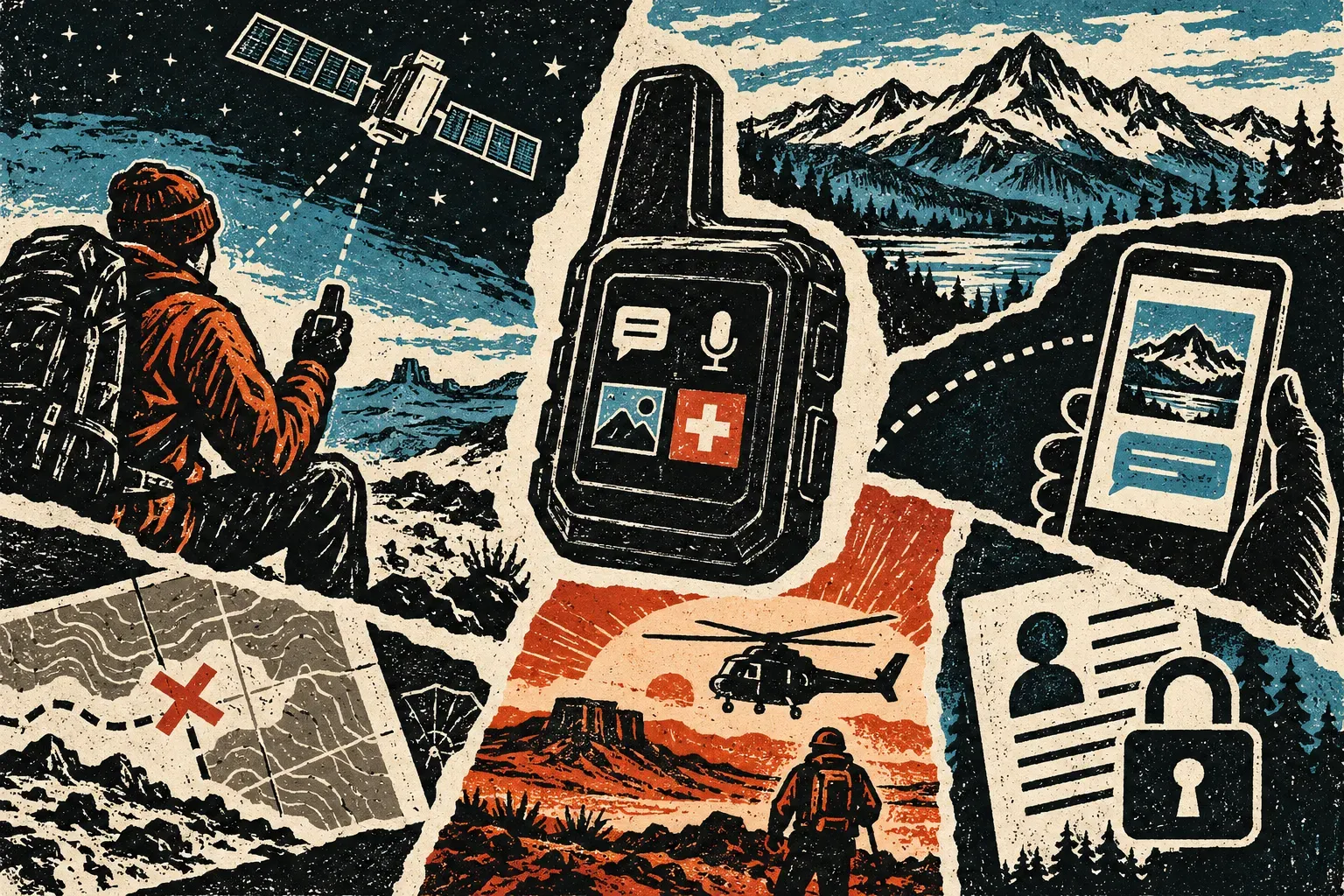
The recent announcement from Garmin of the inReach Mini 3 series of satellite communicators makes the dependencies of features as interesting as the features themselves. I am interested to see what Garmin’s new line of satellite communicators actually supports before reading about more features that might promise more safety than can actually be delivered.
Garmin New Zealand released details on the new Mini 3 and Mini 3 Plus satellite communicators on December 3, 2025. Garmin describes a color touchscreen, microphone and speaker on the Mini 3 Plus, along with voice messages of 30 seconds and photo sharing through its Messenger app. Features vary between models.
I have not handled either device. I can discuss the stated design without claiming to know how either device performs.
Garmin describes interactive SOS to Garmin Response and claims up to 350 hours in a tracking mode set to 10 minute intervals for the series. The release notes an active satellite plan for relevant features and jurisdictional restrictions. It would be wrong to include the battery life of the inReach Mini 3 series in an article and then leave out the conditions that need to be met for the features to work.
The phrase up to is used to describe a company’s claim in a named mode of operation. I will not translate this into a figure for the time that a particular person can expect to get from a particular trip, as this would require evidence not supplied in the announcement.
As a backend software developer, I am always interested in what a function is dependent on. The photo sharing description names an app. The satellite features bring a plan into the account. Those relationships belong in the description of what Garmin is announcing.
A series name is used for a number of models in a range of products. The features described for one model should not be assumed to apply to every model in the series. The release for the Mini 3 series lists different features for the different models in the series.
The design of having another way to express a message is great, but that is not the same as knowing that communication will work for a given person. That requires more evidence than this release of information. I can welcome a design idea without claiming that every uncertainty about its use has been removed.
My interest in backup plans for communication was triggered by a mapping failure in West Texas in 2018. That experience explains why dependencies catch my attention. It tells us nothing about the performance of this Garmin series. I shall use that event to shape my questions for future research rather than trying to use it to answer any questions about the inReach Mini 3 series of satellite communicators.
I would like to have a closer look at the SOS description. A way to send SOS messages to Garmin Response is worth understanding on its own, but it is not the same as being rescued. The release describes communication with a response service. I will not promise what happens afterward or how quickly help arrives.
Another issue that I would like to explore in more detail is that of privacy. As yet, I do not have enough information to form a full judgment on this product’s handling of users’ data. I shall list this as a piece of information that would be useful to have before forming a more complete view of the product.
I shall not include cost in this evaluation as there are no subscription prices or U.S. prices supplied for this article. I shall not make up numbers from memory nor shall I call this device a bargain. To evaluate value for money one needs to know the relevant terms. Confidence in explaining technology does not automatically transfer to confidence in the details of said technology.
I welcome another way to communicate, and I want the conditions to receive equal attention. Garmin is making the claims about these devices.
I would like to see future evidence addressed to actual performance in the specified conditions. That is a wish for a fuller evaluation, not a claim that one has already happened or that none exists elsewhere.
My initial reaction is to be interested in the features of this new product, and the conditions under which they will work. Garmin is making these claims. I am reading them as a software engineer and walker who values preparation. The announcement gives me questions to ask, but not an ownership story, field review or any other reason to believe that buying this device settles the safety plan of the user.



Comments