A Street Can Have More Than a Through Route
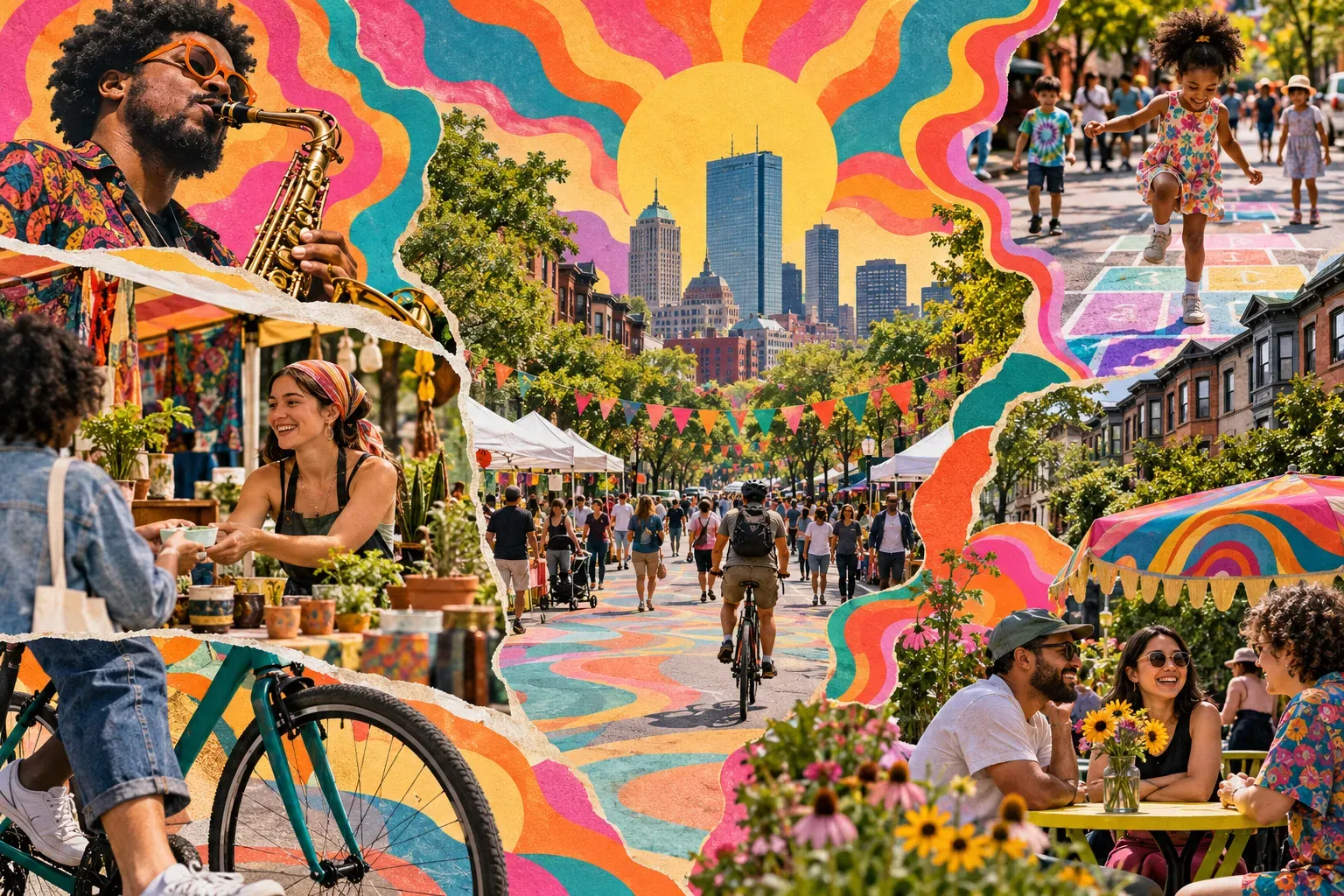
I like an announcement that treats a street as somewhere to spend time. Boston’s 2025 Open Streets plans do that plainly. The city proposed temporary space for neighborhood activities and local businesses, with cars kept out for the event. My reaction is approval of that purpose, without pretending a pleasant plan proves every claim about street design.
Boston’s official series page dates the 2025 announcement to May 7. The announcement included Mattapan for the first time, with an October 18 date. The announcement described room for music, games, bicycling and businesses. Again, I am discussing the published plans of the city for the Open Streets event and not reporting from the sidewalks of Boston or trying to prove that the event was a success.
I am a Chicago resident who has never owned a car. That makes me interested in how public space welcomes people on foot. My preferences are not universal. I want a conversation about streets as places to gather, not just places to pass through quickly.
The announcement’s local business element appeals to me. It gives the street a role in neighborhood life beyond carrying people past the shops. I cannot claim that it increased sales. The plan supplies no results to support that claim. I can still like an invitation that treats businesses as participants in the place.
Open Newbury was a separate part of the announcement, with Sunday closures and a December 7, 2025 holiday date. Similar names should not require readers to guess whether or not all of the events will be set up the same way. As a sign shop manager, I value clear information more than most people would find interesting to discuss at dinner.
Again, there is a difference between closing a street to vehicles and making room for something else on that street. I would like the latter to be spelled out in the event announcement. A person should be able to understand what an event is for without agreeing with me about transport. This plan names activities. That is a better invitation than an argument conducted entirely against cars.
The purpose of the event is good. I like room for walking, looking around and choosing to linger. I do not need a crash statistic to explain that preference. The source does not supply one.
The city said it would engage residents and small business owners about possible expansion. This is great to hear and I look forward to reading more about what people say and how the city responds in the future.
The discussion about the use of a street can be valuable even if people disagree about how a street should be used. This discussion should not turn the people who drive into the villains of the announcement. Someone can be very interested in a neighborhood and still disagree with how you would use a road.
A temporary event such as this can be judged on its merits as a temporary event. We do not need to use such events to settle the design of the streets for the rest of the year. I would be equally suspicious of using such events to claim that the issues of the everyday use of the streets have been settled.
The announcement describes a schedule from 2025. Those dates are past as I write. This is not a fresh invitation for this weekend. This is a post about the plans for public space that were published as a part of the official series page for the Boston Open Streets events.
I would like to see any evaluation of the use of public space give people the chance to describe what they did with the space during the event. That is an interest in later evidence, not a substitute for it. The announcement of the event does not tell us anything about attendance, business effects or whether people felt welcome at the event.
My eye goes toward the instructions as much as the attractions. I want a person unfamiliar with the series to know what belongs to each event. That is a standard I bring from work, not an allegation that Boston failed it.
I’m glad to see that there are more activities for people than just walking around for exercise. Music, games and even browsing around shops on the street are all good reasons to be out on the street. My preference for an invitation is for it to feel good to go to the street, not to be counting up the number of miles you’re walking.
I would take that idea seriously without making the occasion carry every argument about city life. An event can offer a specific use of space and still leave questions for another day.
This is a good purpose for a street and for an event on a street. Let people gather, describe activities on the street, and stick to the evidence of what is possible on a street. That is better than making up stories about the driver of a car or about the success of an event. A street can be a destination.
Comments