A Walk With Time to Spare
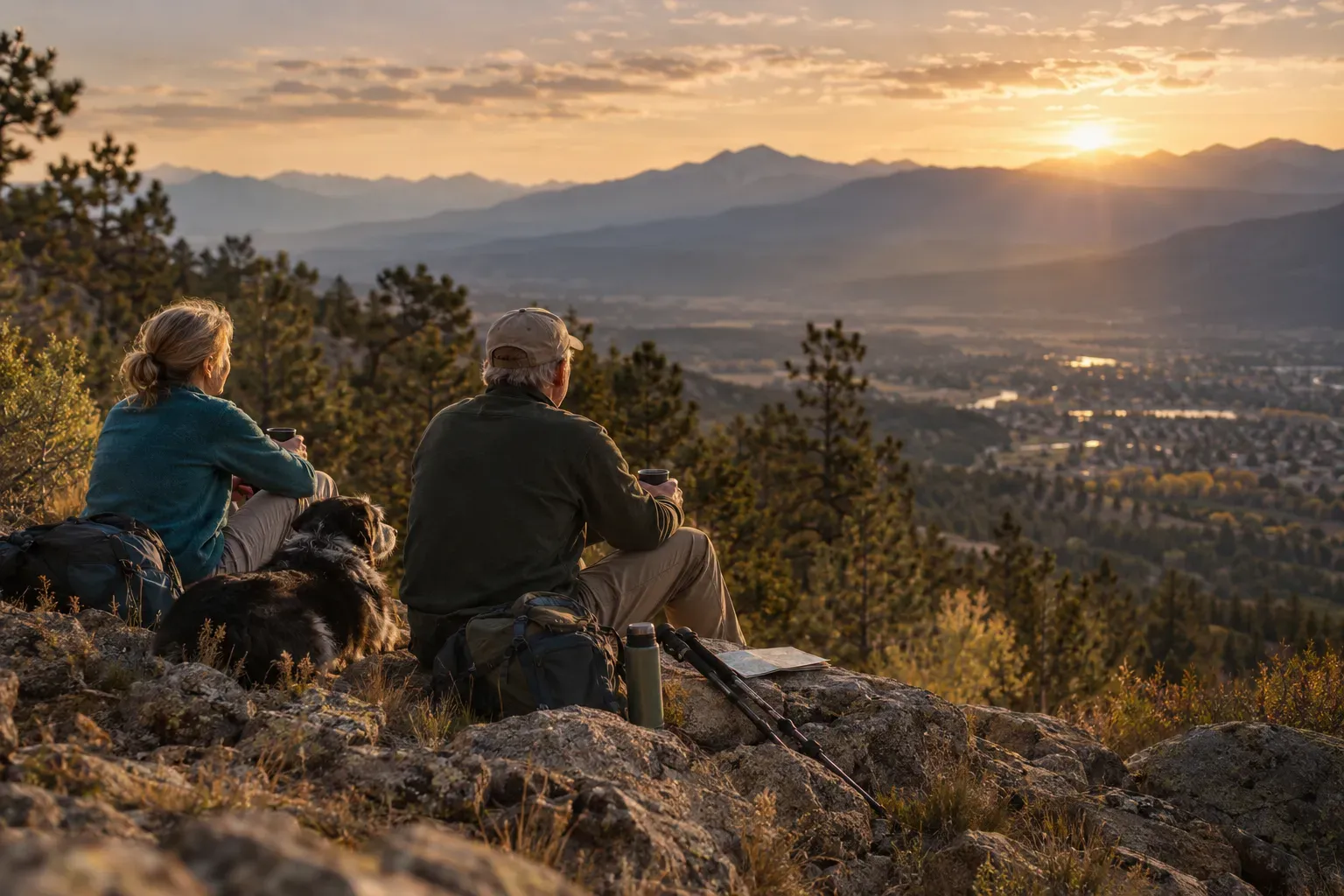
My ideal morning begins with Teresa planning our outing and me checking to make sure our pack is ready. She is more organized, and I am more likely to add water. Transit waits nearby, ready to supervise.
I would like to take a long walk above Salida on easy ground with great views along the way. I no longer choose a walk by the height of its highest point. I spent a year resenting my trekking poles after my knee surgery in 2017. That was a waste of a year.
I prefer a morning that starts out cool and has plenty of light for reading the terrain. I prefer not to be rushed. We can always change our plans for the day. That is so much better than being locked into a long day of hiking.
At home I can spread out the full sheet of paper map to see the entire route. I have spent much of my working life measuring pieces of land. A full sheet still pleases me. I can follow the route with my finger, check the return route and fold up the map for use rather than display. It can then be put into its zip bag.
I carry the compass I have had since 1983, along with a GPS unit, headlamp and poles. I check them before we leave, but I do not turn it into a speech about everyone else’s habits.
I pack the coffee last. There should be something warm left when we stop.
Transit has waited long enough, and we are ready to leave. The first few minutes of our hike are always spent settling into our stride and getting used to the terrain. I notice how my knee feels and let my stride find its length. Teresa can take her time and walk at her own pace, and I will not be pressuring her to keep up with me.
The ground first and the views later is my mantra for the walk. I’m especially interested in the water courses and the trail itself, the ups and the downs. These are habits from work, but this morning nobody needs a measurement from me.
I find that on a good day I remember to leave space for Teresa’s thoughts on our walks together, even when we are not speaking. Transit seems to find this acceptable too as he continues to focus on the trail ahead.
I like a long walk that gradually unfolds as the morning progresses. There is something nice about leaving behind the houses and views of the town below and heading up into the mountains where the view can gradually unfold as we ascend.
Our first rest stop is to sit and take a drink of water and look back along the way we have come so far. This will be the return journey, so it is good to have some thought as to how we will fare on the down slopes of the day. I think about how much of the day I want left when we reach home.
My knee is the reason I use poles on a descent, but it is not the whole story of being 65. I can still spend a morning outside with my wife, carry my own pack and stop at something that interests me.
The ground has a little bit of loose grit on it, and my pole tips can make a slight sound on it as I take each step. I pay attention to my footing and let Teresa take the downhill at her own pace. She is much better at it than I am. Marriage has survived many larger facts of life than this.
We reach a place where sitting feels like the next sensible thing. I take off my pack, pour out some coffee and take my time with the lid. I don’t want to be rushing to drink my coffee up here. It is nice to feel the warmth of the coffee on my hands. Transit stays with us, and for a few minutes I have no urge to go farther.
This is what I wish people understood about a long walk. Yes, distance can be an issue but more so, having enough time in the space of the walk to enjoy it is what I’m looking for. I want to be able to enjoy my coffee before checking where we are going on the next part of the walk.
I grew up in Pueblo and spent childhood summers with my grandparents near San Luis. It is great to be out on familiar ground and I can get lost in thought about past times but I return to the present and look at the person next to me.
I do not need to make this walk stand for all of those years. There are ordinary things worth recording on their own. The pack strap feels better after I shift it. The coffee is still warm. Teresa is ready to leave before I am.
We walk until the route and our energy tell us it is time to turn. I check the map again, not to make a ceremony of it, but to keep my decisions tied to something. My preference for turning early comes with me. A day can be going well and still have reached its right turning point.
Going back over the ground that you have already covered gives you a different perspective on things. A bend that seemed small on the way out looks different now. This is something that I have always liked about walking.
I’m tired of accounting for days in terms of what I got out of them. A good day of walking is a good day of walking whether we got far or not. I’m ready for some food now.
I still watch the daylight and keep track of where we are. The rest of the job can go. There is no client waiting for a result. No boundary needs settling before we can head home. That absence is part of the pleasure of retirement from most of my work.
The last part of the walk is easy enough for conversation. I may go on too long with some explanation, but on my perfect day I would notice and finish the thought before starting another. Teresa gets her share of the walk too.
The pack can be put away first. The map needs its place, the thermos needs washing, and the headlamp stays ready for another outing. Old gear lasts better with attention. I have no desire to buy more gear just to feel like I’m prepared for something. Putting things away is better than buying things.
Then I sit with the pleasant weight of the morning in my legs. There’s no more paperwork for Transit today, and very little for me. I can make myself a meal, spend some quality time with my wife, and have as much time as I’d like for the rest of the evening.
In the past, I’ve thought of impressive days to be those with impressive destinations. I climbed most of the Collegiate fourteeners before my knee surgery. Those are my days. I don’t have to keep repeating them to respect them. A gentler route can ask for good judgment and give me more room to notice what is close.
I can continue to write about our walks on a weekly basis, as long as I can keep it useful to you. I can tell you what I carry, where my attention goes and what I have had to change. I cannot promise my choices will fit every body or every patch of ground.
The evening I want has no argument with the morning. Teresa and I chose a walk that we would enjoy and we paid attention to it as we walked. We came home with plenty of time to spare. Teresa is here and Transit is here. My poles are put away for the next descent. I can think about tomorrow without wishing I had treated today differently.

Comments